
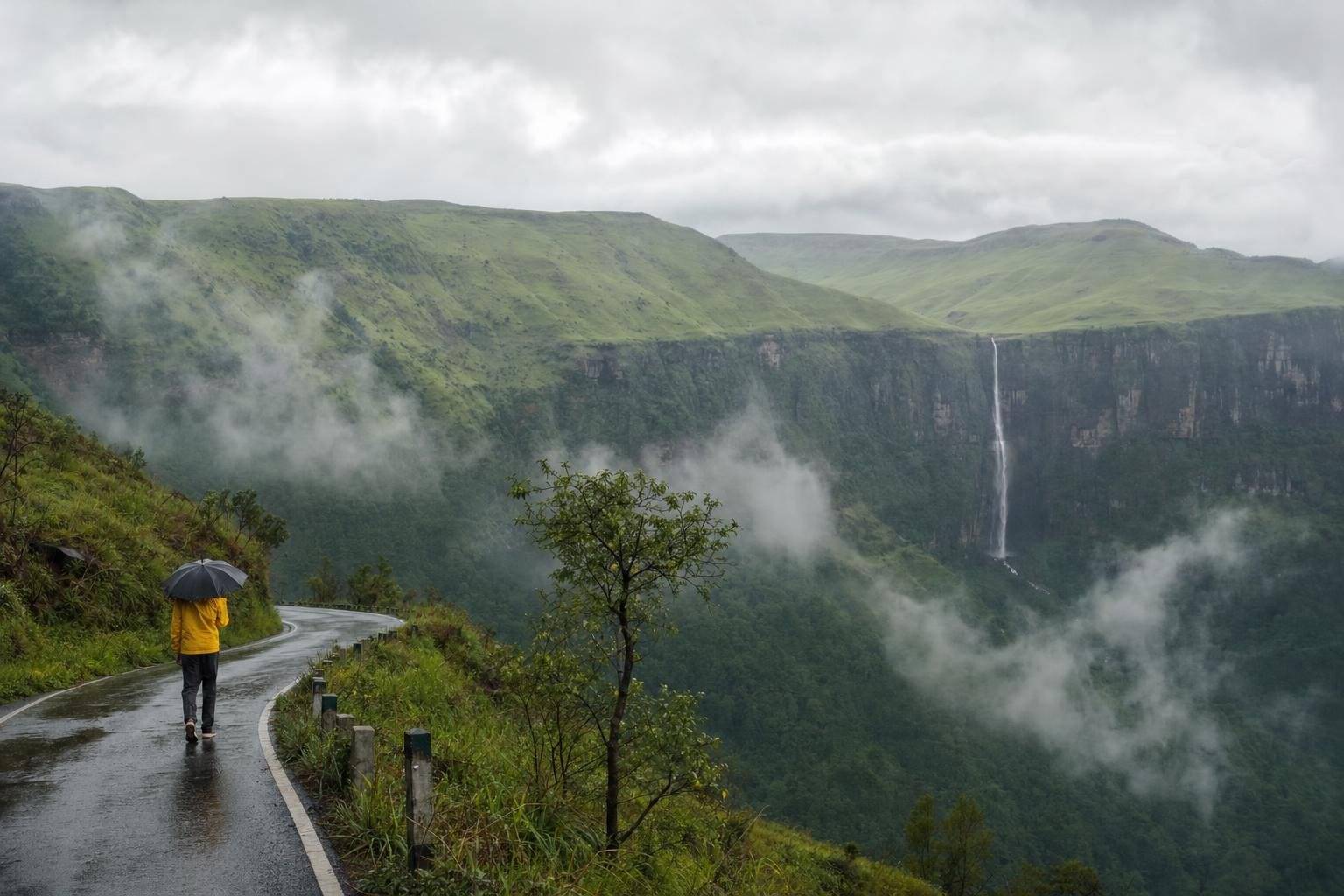
Meghalaya in monsoon is worth it if you are going for rain, waterfalls, mist, green hills and a slower trip. It is not the right season if your main dream is a clear glassy Umngot river at Dawki, easy treks, dry clothes and blue-sky viewpoints.
For a first-timer from Bangalore, October is the safer and easier choice. June to September is more dramatic, but also messier. You need buffer time, flexible plans and proper rain gear. You also need to be okay with leeches on forest trails, temporary road blocks after landslides, and activities being cancelled at short notice.
If you have already seen many hill stations and want to experience rain as the main event, monsoon can be memorable. If this is your one Meghalaya trip for the next few years, choose October unless waterfalls in full force matter more than everything else.
Is Meghalaya in monsoon worth it for a first trip?
Yes, but only for the right kind of traveller.
Meghalaya is one of the few places in India where the monsoon is not just background weather. In and around Sohra, also called Cherrapunji, rain shapes the whole trip. Waterfalls swell, small streams appear beside roads, clouds move across valleys quickly, and the hills turn a deep green that October cannot fully match.
The trade-off is real. Rain can reduce visibility to a few metres. A viewpoint that looked perfect in photos may be fully covered in cloud. The same rain that makes Nohkalikai, Seven Sisters, Dainthlen and Wei Sawdong powerful can also make steps slippery and access unsafe. Local authorities or village committees may close trails or waterfall approaches for a few hours or a few days.
So the honest answer is this:
- Go in June to September if you want heavy rain, loud waterfalls, green landscapes and do not mind changing plans.
- Go in October if you want a more balanced first trip with waterfalls, clearer roads, better visibility and a higher chance of seeing Dawki/Shnongpdeng looking clean.
If you are still building the basics, read this wider Meghalaya travel guide before finalising dates.
What is different between June-September and October?
The biggest difference is not temperature. It is control. In October, you can usually plan your route and expect most days to follow that plan. In the monsoon, you should plan the route but accept that the weather gets the final vote.
| Month | What it feels like | What works well | What can disappoint |
|---|---|---|---|
| June | Monsoon builds up. Rain is frequent, but some clear windows are possible. | Waterfalls, Shillong cafes, short drives, Umiam views between showers. | Trails become slippery. Dawki clarity starts reducing. |
| July | Peak wet season in many parts. Long rain spells are common. | Waterfalls in full force, misty Sohra, slow scenic travel. | Landslide delays, poor visibility, leeches, cancelled river activities. |
| August | Still very wet. Greenest landscapes, but roads can be tired from weeks of rain. | Waterfalls, cloudscapes, photography in rain, relaxed stays. | Muddy village trails, road repair delays, damp rooms if you choose poorly. |
| September | Rain begins to reduce, but heavy spells still happen. | Better balance than July-August, strong waterfalls, fewer crowds on some weekdays. | Unpredictable showers, river water may still be muddy or fast. |
| October | Post-monsoon. Usually easier for first-timers. | Dawki/Shnongpdeng, root bridge walks, viewpoints, caves, longer road days. | Holiday crowds, higher demand, waterfalls may be less fierce than peak monsoon. |
For a Bangalore traveller taking leave and flights, October gives you better odds. June to September needs one extra buffer day if your return flight from Guwahati is fixed and important.
How do you reach Meghalaya from Bangalore in the rains?
Most travellers from Bangalore fly to Guwahati, then drive to Shillong. Guwahati airport to Shillong is around 120 km. In dry weather it can take about 3.5 to 4.5 hours. In heavy rain, traffic, fog and roadwork can stretch the day.
Your common options are:
- Private taxi from Guwahati airport to Shillong: Most convenient if you land with luggage or family. It also lets you stop for food or a short Umiam Lake break if weather allows.
- Shared cab from Guwahati to Shillong: Cheaper than a private taxi, but less flexible. You may need to reach the shared taxi point from the airport.
- Stay in Guwahati for a night: Sensible if your flight lands late, the weather is bad, or you are travelling with older parents or children.
Avoid planning Guwahati airport to Sohra on the same day if you land in the afternoon during peak monsoon. Shillong to Sohra is around 55 km, but rain, fog and local traffic can make it slower. Reaching Sohra after dark in bad weather is tiring, especially on your first day in the Northeast.
A safer first day is Bangalore to Guwahati, then Guwahati to Shillong. Sleep early. Start for Sohra the next morning after checking the road condition.
What stays open, and what can close during monsoon?
Meghalaya does not shut down in monsoon. Shillong, Sohra, Mawphlang, Mawlynnong and many local markets continue as normal. But nature-based activities are highly weather-dependent.
Waterfalls
This is the strongest reason to go in monsoon. Nohkalikai, Seven Sisters, Dainthlen and other Sohra-side waterfalls look powerful during heavy rain. You may not get a clean viewpoint every time, but when the cloud lifts, the scale is impressive.
The risk is access. Some waterfall stairways become unsafe. Wei Sawdong, for example, has steep sections and can be slippery even outside peak rain. If local people say not to go down, listen. Do not push for a photo.
Dawki and Shnongpdeng
This is where many first-timers feel disappointed in monsoon. The Umngot river is famous for clear water, but that postcard clarity is not a monsoon promise. Heavy rain can make the water high, fast and muddy. Boating, kayaking or cliff-jumping style activities may be paused if the current is unsafe.
If Dawki is your top priority, October or later is usually a better bet than July or August.
Caves
Mawsmai and Arwah caves may be open on normal rainy days, but cave access can change after heavy rain. Waterlogging, slippery rocks and low visibility can make a cave visit uncomfortable. Wear shoes with grip and do not enter if staff or locals advise against it.
Living root bridges
The living root bridges are not a theme park with one fixed opening rule. They sit in real villages and forests. Trails can be muddy, steps can be slippery, and leeches are common in wet months. The Double Decker Living Root Bridge near Nongriat involves a long stair walk from Tyrna with over 3,000 steps each way. In heavy rain, that is not a casual stroll.
If root bridges are central to your trip, read our guide to the top living root bridges in Meghalaya and keep the trek for a day when rain is lighter.
Kaziranga combination trips
Many people combine Meghalaya with Kaziranga in Assam. This is not ideal in peak monsoon because jeep safaris in Kaziranga usually remain closed during the wet season and reopen only after the park authorities allow it. If Kaziranga matters, plan closer to the official safari season and check current opening status before booking. Our Kaziranga places guide is useful once your dates are outside the monsoon closure period.
How bad are leeches, landslides and road delays?
They are manageable, but you should not pretend they do not exist.
Leeches
Leeches are common on wet forest trails, root bridge routes, grassy paths and waterfall approaches. They are not usually dangerous, but they are unpleasant if you are not prepared.
You can reduce problems by wearing:
- Full-length quick-dry trekking pants.
- Proper shoes, not open sandals on forest trails.
- Long socks, ideally pulled over the trouser cuff.
- A light rain poncho that does not drag on the ground.
Do not panic if a leech attaches. Remove it calmly, clean the spot and cover it. Carry basic antiseptic and small bandages. If you are very uncomfortable with leeches, avoid deep forest walks in July and August.
Landslides and road blocks
Landslides are a real monsoon risk across hill roads. Most disruptions are local and temporary, but they can still affect your day. A drive from Shillong to Sohra or Sohra to Dawki may take longer than expected. Routes can be diverted. A waterfall stop may be skipped because a road section is blocked.
The practical rules are simple:
- Do not keep a packed sightseeing day after a night of heavy rain.
- Avoid late evening hill drives in poor visibility.
- Keep your Guwahati return flight on a separate day if possible.
- Ask your driver or homestay about road conditions before leaving.
- Do not argue with local advice near landslide-prone stretches.
Fog and visibility
Fog can be more disruptive than rain. In Sohra, cloud can cover the road and viewpoints quickly. Your driver may slow down a lot, which is good. Do not pressure them to speed up because you want to tick off one more stop.
How many days should you plan from Bangalore?
For October, 5 nights can work. For June to September, 6 nights is more comfortable because one day may get eaten by rain.
A sensible monsoon plan looks like this:
- Day 1: Fly Bangalore to Guwahati. Drive to Shillong. Keep the evening light.
- Day 2: Shillong local sights, cafes, Police Bazaar, Ward's Lake if rain allows.
- Day 3: Drive to Sohra. Visit Dainthlen, Nohkalikai or other stops depending on visibility.
- Day 4: Sohra waterfalls and caves. Keep the plan flexible.
- Day 5: Root bridge walk only if conditions are safe, or choose a gentler Mawlynnong/Dawki side day.
- Day 6: Return towards Shillong or Guwahati with a buffer.
- Day 7: Fly out from Guwahati.
For October, you can make the route tighter:
- Shillong.
- Sohra.
- Nongriat or root bridge day.
- Dawki/Shnongpdeng and Mawlynnong.
- Return to Guwahati.
If you would rather not handle daily route changes, permits where applicable, drivers and weather calls yourself, Breeziah’s 6-Day Cloudland Tour is a useful length for a first Meghalaya trip. For a shorter October-style break, the 5 Days Magical Meghalaya Tour suits travellers who want the main Shillong-Sohra-Dawki circuit without stretching leave too much. If you want more breathing room for waterfalls and caves, look at the Enchanting Meghalaya Escape.
Where should you stay in monsoon?
Do not choose a stay only because it looks remote and pretty online. In monsoon, access matters.
Shillong
Shillong is the easiest base. It has more restaurants, pharmacies, transport options and backup plans. If rain ruins sightseeing, you can still spend the day in cafes, markets and short local drives. For your first and last nights, Shillong is practical.
Sohra or Cherrapunji
Sohra is worth at least one night if waterfalls are the reason you are going. It lets you start early and use small clear windows in the weather. Choose a stay with reliable road access, hot water, parking if you have a taxi, and recent reviews from rainy months.
Dawki or Shnongpdeng
In monsoon, stay here only if you understand that river activities may not happen. Riverside camps can be damp and uncomfortable in heavy rain. October is a better time if you want the classic river experience.
Homestays near root bridge trails
These can be memorable but are not for everyone in monsoon. Expect wet clothes, basic facilities, insects and slippery paths. If you are not a regular trekker, do a day visit only when the weather is good.
For more first-timer basics, including local behaviour and road planning, read things to know before visiting Meghalaya.
What should you pack for Meghalaya in monsoon?
Pack for wet weather, not cold weather. Meghalaya can feel cool because of rain and wind, but bulky winter clothes are usually less useful than quick-dry layers.
Carry:
- A good rain jacket or poncho.
- Quick-dry T-shirts and trousers.
- One light fleece or sweatshirt for evenings.
- Trekking shoes with grip.
- Extra socks, more than you think you need.
- Waterproof phone pouch.
- Dry bags or plastic packing cubes for clothes.
- Small towel.
- Basic medicines, antiseptic, bandages and any personal prescriptions.
- Power bank.
- Mosquito repellent.
- A small daypack with rain cover.
Avoid jeans for waterfall days and treks. Once wet, they stay wet for too long. Also avoid white shoes unless you are okay with them turning brown by Day 2.
What should you eat and drink during rainy days?
Rainy Meghalaya is good for simple hot food. In Shillong and Sohra, try jadoh, smoked pork if you eat pork, dohneiiong, tungrymbai, local tea and momos. Cafes in Shillong are useful on days when outdoor plans fail.
On long drives, do not wait until you are starving. Rain delays can make lunch late. Keep snacks in the car, especially if you are vegetarian, travelling with children, or particular about food. In smaller villages, menus can be limited and meal timing may not match your city routine.
Drink bottled or properly filtered water. Carry your own bottle and refill where your stay confirms safe water. Hot tea is easy to find, but toilets on remote routes may be basic, so plan stops when you see a clean place.
Should you choose June-September or October?
Choose June to September if your idea of Meghalaya is rain-first. You want huge waterfalls, mist, wet roads, green slopes and the feeling of being in the middle of the monsoon. You are okay skipping Dawki boating, changing the order of your route, and returning with muddy shoes.
Choose October if this is your first Northeast trip, your leave is tight, or you are travelling with parents. October gives you a better mix: waterfalls still have post-monsoon volume, roads are usually easier, root bridge walks are more manageable, and Dawki has a better chance of looking like the photos you have saved.
For most first-timers from Bangalore, October is the more sensible answer. For travellers who already know they enjoy rain and do not mind discomfort, monsoon Meghalaya can be absolutely worth it.
What is the practical next step?
Decide what you would regret missing.
If the answer is “clear Dawki water and a smooth first trip”, book October. If the answer is “full waterfalls and proper monsoon mood”, choose June to September and add a buffer day. Keep Shillong and Sohra as your core route, do not overpack the itinerary, and check local conditions every morning.
Meghalaya rewards travellers who leave space in the plan. That is even more true in the rain.
Frequently asked questions
July is not a bad time if you specifically want peak monsoon landscapes and powerful waterfalls. It is a poor choice if you want clear Dawki water, easy trekking and predictable road days. Expect heavy rain, leeches on forest trails, fog around Sohra and possible road delays. Keep the itinerary light and add buffer time before your Guwahati return flight.
Do not plan a monsoon trip expecting the classic clear Umngot river view. During heavy rain, the river can become high, fast and muddy. Boating or other river activities may be stopped if the current is unsafe. If Dawki is your main reason to visit Meghalaya, October or the post-monsoon months are usually a better choice.
You do not need to cancel only because it is monsoon, but you should plan around the risk. Landslides and road blocks can happen after heavy rain, especially on hill roads and approach routes to waterfalls or villages. Most trips continue with delays or route changes. Avoid late evening drives, keep a buffer day, and follow local road advice.
Leeches are common on wet forest trails, root bridge paths and grassy waterfall approaches. They are usually more unpleasant than dangerous. Wear long socks, full-length quick-dry trousers and shoes with grip. Carry antiseptic and small bandages. If you are very uncomfortable with leeches, avoid long forest walks in July and August and stick to road-accessible viewpoints.
For most first-timers, October is easier than September. Rain reduces, visibility improves and road travel is usually less stressful. Waterfalls still have good post-monsoon flow, and Dawki has a better chance of looking clear than it does in peak monsoon. September can be greener and quieter, but it still carries more rain uncertainty.
Plan at least 6 nights if you are travelling in June to September from Bangalore. One day can easily slow down because of rain, fog or road delays. A 5-night plan can work in October, but monsoon needs more breathing room. Keep Shillong and Sohra as the base route, and treat Dawki or long treks as weather-dependent additions.
Nyota