
Rhinos and Root Bridges: How to Combine Kaziranga National Park and Meghalaya in One Trip
Fusing the mega-fauna grasslands of Assam’s Brahmaputra Valley with the misty limestone plateaus and living bio-architecture of Meghalaya, our definitive 7-day combined itinerary maps out a flawless cross-terrain circuit. Discover how to transition seamlessly from low-altitude dawn rhino safaris in Kaziranga directly up into the cool pine forests of Shillong and the deep canyon steps of Cherrapunji. We break down the premium SUV transit logistics you need, cross-environment packing blueprints, and community-first conservation ethics that define a true luxury journey into the soul of Northeast India.
Quick Summary: The Ultimate 2026 Dual-Province Blueprint
- The Core Concept: A masterfully integrated overland expedition fusing the mega-fauna grasslands of Assam’s Brahmaputra Valley with the misty limestone plateaus and living bio-architecture of Meghalaya.
- Strategic Transit Node: Guwahati serves as the vital geographic anchor, providing smooth logistics to bridge both regions without wasting daylight backtracking.
- The 2026 Trending Focus: "Biodiversity Continuity Travel"—a shift toward multi-terrain circuits that seamlessly contrast vulnerable wetland ecosystems with sacred high-altitude tribal forests.
- Optimal Flow: Start with low-altitude dawn safaris in Kaziranga, then make a clean, vertical ascent into the cooler hills of Shillong and Cherrapunji.
- Pro Tip: Book your central zone elephant safaris at least 30 days in advance; morning slots are restricted by wildlife conservation boards to minimize animal stress patterns.
1. The Biogeographic Matrix: Route Architecture
To combine the alluvial lowlands of Assam with the wet mountain terrain of the Khasi Hills, an itinerary must be organized around linear efficiency. This 7-day master circuit transitions from the riverine floodplains of the Brahmaputra Valley directly up into the high-altitude plateaus of Meghalaya:
| Day | Primary Node | Key Experience | Elevation Step | Driving Time |
|---|---|---|---|---|
| Day 1 | Guwahati → Kaziranga | Central Sector Arrival & Evening Safari | 180 ft → 310 ft | 4.5 Hours |
| Day 2 | Kaziranga National Park | Dawn Wildlife Tracking & Orchid Sanctuary | 310 ft | Local Circuit |
| Day 3 | Kaziranga → Shillong | Highland Highway Climb & Umiam Lake Sunset | 310 ft → 4,990 ft | 5.5 Hours |
| Day 4 | Shillong → Cherrapunji | Mawphlang Sacred Forest & Laitlum Canyons | 4,990 ft → 4,860 ft | 2.5 Hours |
| Day 5 | Cherrapunji (Sohra) | Living Root Bridges & Rainbow Falls Expedition | 4,860 ft → 2,100 ft | Active Trek |
| Day 6 | Sohra → Shnongpdeng | Umngot River Canoe Drifting & Riverside Glamping | 4,860 ft → 400 ft | 3 Hours |
| Day 7 | Shnongpdeng → Guwahati | Krang Suri Falls & Final Airport Drop | 400 ft → 180 ft | 5 Hours |
2. Day 1: Arrival in Guwahati & The Road to the Rhinos
Your multi-terrain expedition kicks off with a morning pickup from Guwahati airport. Boarding your private, high-clearance SUV, you instantly escape the city bustle by moving east along National Highway 27, tracing the wide contours of the Brahmaputra River basin.
The Alluvial Transition
The drive to Kaziranga transitions through green tea estates and rural Assamese villages. As you near the boundaries of the park, the roadside foliage thickens into fields of tall elephant grass.
The First Foray
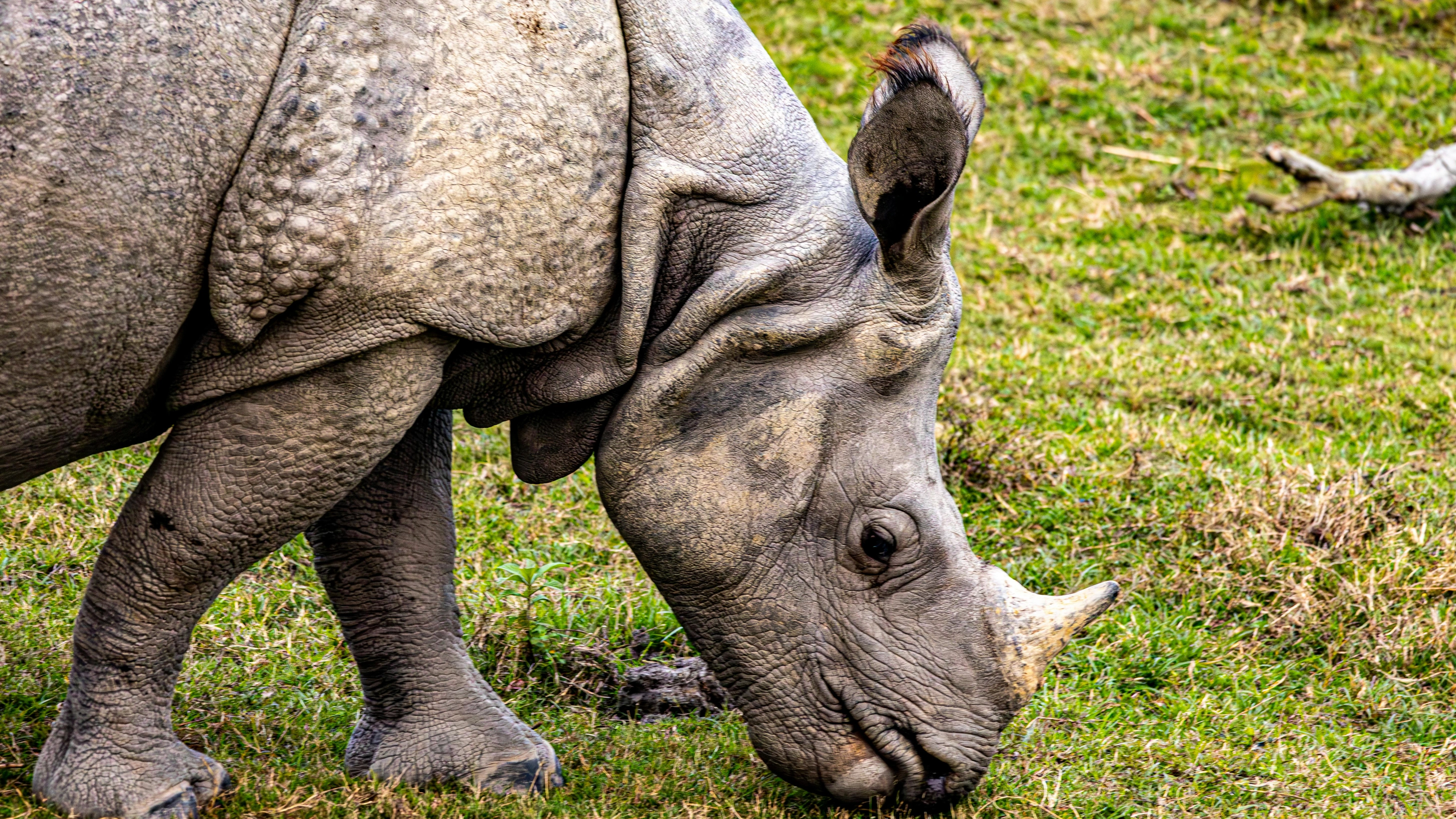
Check into your boutique eco-lodge by early afternoon. Waste no time and head straight out for an afternoon open-jeep safari inside the Kohora (Central) Range. As the midday heat breaks, look closely along the edge of the marshes (bils); you will catch your first sights of the prehistoric Indian One-Horned Rhinoceros grazing peacefully beside wild water buffaloes.
3. Day 2: Dawn Saturation—Grasslands and Riverine Forests
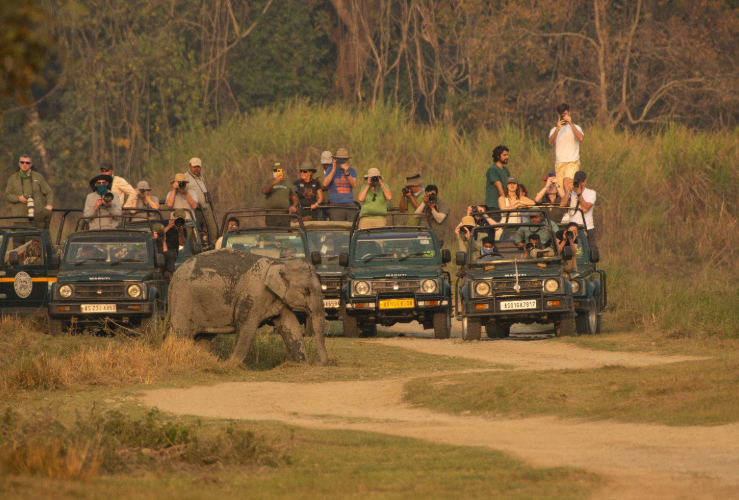
Set an early alarm for 5:30 AM. Dawn is when Kaziranga is at its most spectacular, with low ground mists rising off the wetlands to filter the morning sunbeams.
[Dawn Wildlife Safari] ---> [Alluvial Wetland Track] ---> [Assam Orchid Sanctuary Restoration]
The Grassland Expedition
Board an elephant safari or an early-morning open jeep to head deep into the Bagori (Western) Range, famed for its high density of rhinos. Moving quietly along the grass tracks, look for swamp deer (barasingha), wild elephants emerging from the woodlands, and the clear pugmarks of the Royal Bengal Tiger printed in the soft river mud.
The Botanical Ark
In the afternoon, complement your safari tracks with a visit to the nearby Kaziranga National Orchid and Cultural Park. This community-managed greenhouse serves as an important botanical ark, preserving hundreds of rare, indigenous orchid species from across the Northeast, alongside traditional agricultural tools and textile displays.
- Internal Link: Study the specific visual targets and trail maps for your safari planning by exploring our standalone guide on the best places to visit in Kaziranga National Park.
- Internal Link: Review local outdoor activities within the park in our resource covering top things to do in Kaziranga.
4. Day 3: The Ascent to the Highland Capital
Bid farewell to the lowlands of Assam and turn your vehicle south toward the steep wall of the Khasi Hills, executing a smooth climb from sea level up into the crisp alpine air of Meghalaya.
The Pine-Clad Welcome
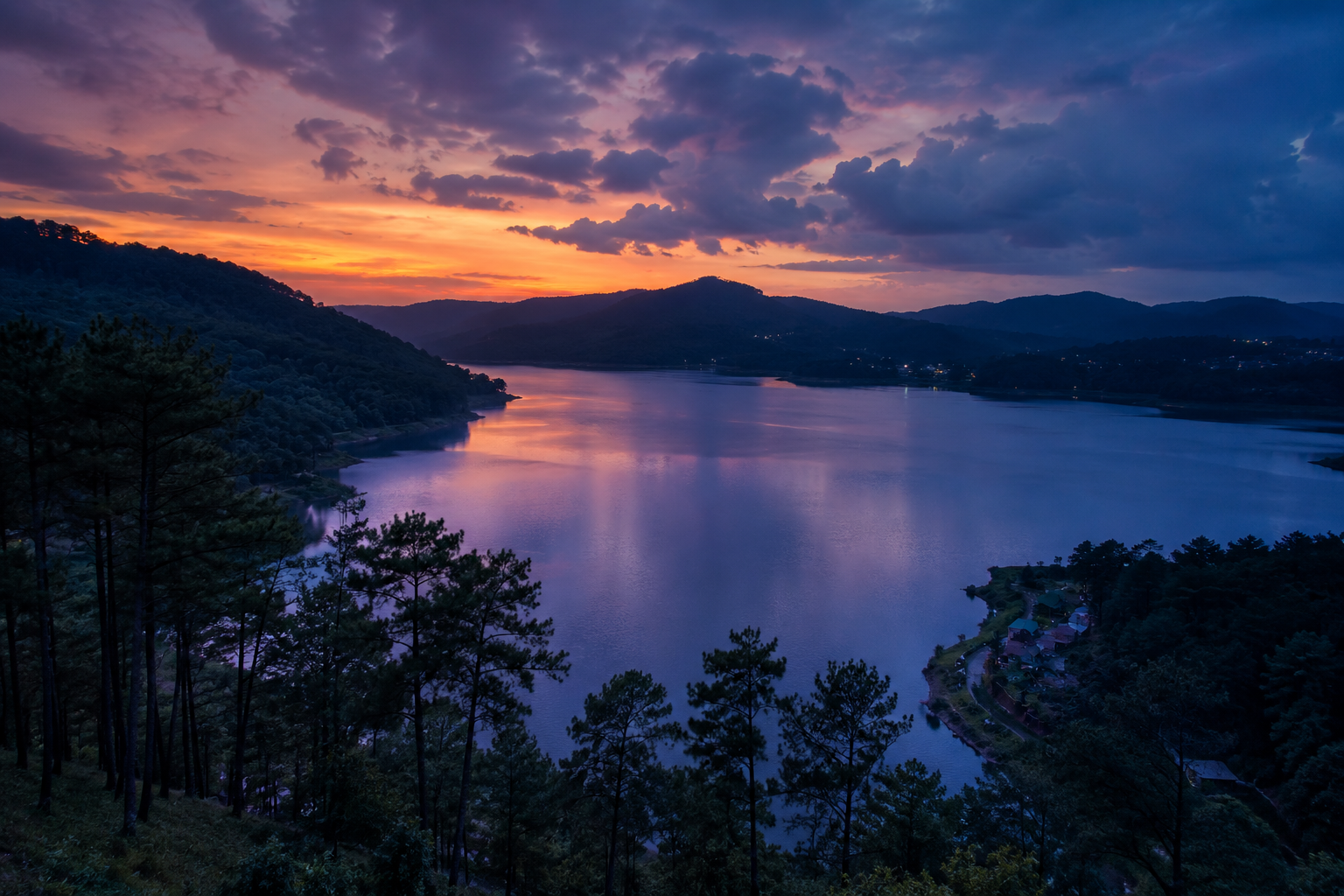
As the highway climbs the switchbacks, the tropical humidity drops away, replaced by the cool breeze of mountain pine forests. Two hours into the climb, the landscape breaks open to reveal Umiam Lake, a sprawling blue mirror framed by rows of stately pines. Pull into our preferred off-beat overlook along the northern ridge to witness the sunset catch the water away from the highway crowds.
Highland Gastronomy
Check into your boutique resort in Shillong by late afternoon. Spend your evening exploring local craft centers or dining at our favorite local spots to sample traditional Khasi cuisine—seeking out slow-simmered dishes rich with wild black sesame, locally sourced ginger, and wild herbs.
- Internal Link: For an expert guide to the capital’s organic food markets, review our Shillong food guide to organic markets and pantry secrets.
- Internal Link: Explore the wide array of experiences waiting in the capital with our comprehensive checklist of things to do in Shillong.
4. Day 4: Monoliths and Canyons—The Khasi Ridge Run
Leave the city behind to explore the deep cultural roots and dramatic geography of the high plateau. Your morning begins at Mawphlang, a preserved ecosystem governed by ancient tribal laws.
The Sanctuary of the Clans
At the gates of the Mawphlang Sacred Forest, you will pair up with a local Khasi community protector. This old-growth forest has been preserved for centuries through a strict taboo: nothing can be removed from the woods. As you walk beneath the thick canopy of moss-covered trees, orchids, and ancient stone monoliths, your guide will share oral histories detailing the lineage of the local clans.
The Amphitheater of Mist
From Mawphlang, your driver will cross the high ridges to Laitlum Canyons. Laitlum translates literally to "The End of the Hills," and the location justifies its name. The ground drops away into a dramatic, vertical gorge that plunges down toward distant valley floors.
- Internal Link: Deciding where to anchor your overnight stay during this mountain circuit? Review our operational analysis on Cherrapunji vs Shillong: where to stay.
- Internal Link: Discover alternative trails in the area with our guide to the best trekking trails in Shillong.
5. Day 5: Deep Valley Descents—The Bio-Architecture Circuit
Today your journey brings you to the rim of the Sohra (Cherrapunji) plateau, a region shaped by intense monsoon rains, towering waterfalls, and incredible living architecture.
The Roar of the Rim
Begin your morning standing at the edge of Nohkalikai Falls, India’s tallest plunge waterfall. The water leaps cleanly off a sheer limestone cliff, dropping into a deep green pool far below.
The Descent to Nongriat
Next, prepare for a physical journey by heading down the steps from Tyrna into the dense subtropical valley below. Your trek down to Nongriat village involves descending over 3,000 stone steps built into the hillside.
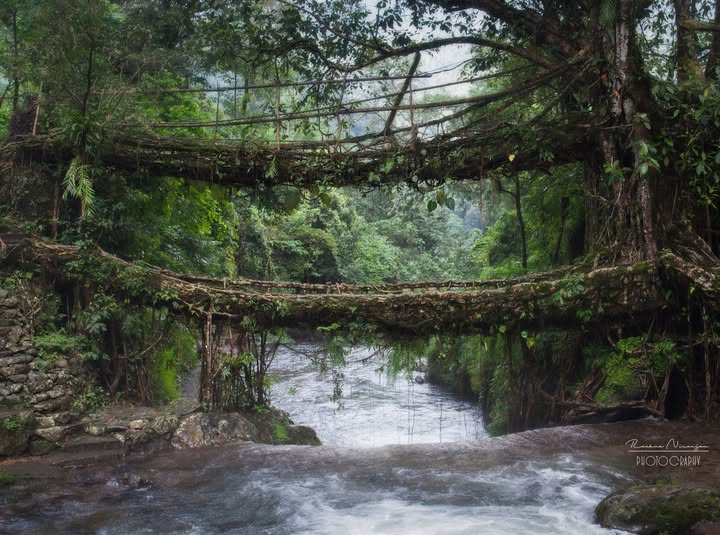
At the bottom lies the Double-Decker Living Root Bridge. These structures are not built; they are grown. Over generations, the local Khasi villagers have trained the aerial roots of the Ficus elastica trees across riverbeds using hollowed-out betel nut trunks, creating living, self-strengthening bridges that easily withstand the intense monsoon floods.
- Internal Link: Review detailed safety tips and step logistics in our high-authority article on the top living root bridges in Meghalaya you must visit.
- Internal Link: For an alternative destination better optimized for multi-generational families, see our multi-generational travel guide.
6. Day 6: The Glass Rivers—Borderlands and Riverside Camps
After climbing back up the steps from the valley, your SUV shifts southeast along the border ridge toward the Jaintia Hills.
The Glass Illusion of Shnongpdeng
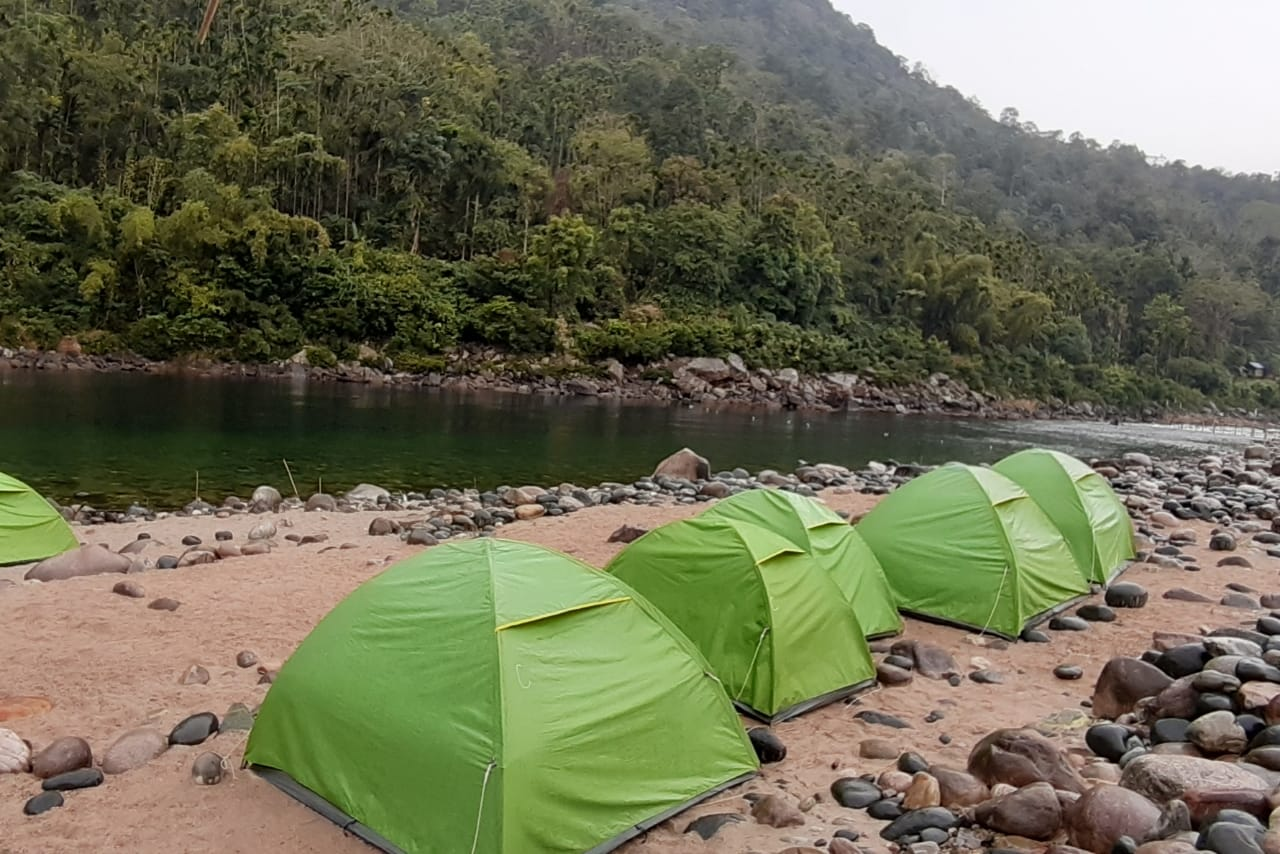
Arrive in Dawki and move slightly upstream to the quiet riverside village of Shnongpdeng. During the dry winter season, the water of the Umngot River is completely devoid of sediment. When you step onto a traditional wooden canoe, the water is so clear that the boat appears to be floating in mid-air, casting a distinct shadow on the smooth stones of the riverbed below.
[Limestone Ridge Transit] ===> [Umngot River Basin] ===> [Premium Beach Glamping Site]
The Riverside Campsite
Here, BREEZIAH sets up premium, private riverside glamping camps. Spend your afternoon engaging in low-impact watersports—such as cliff jumping, kayaking, or zip-lining across the river gorge—before falling asleep to the soothing sound of the clear river water moving past your tent.
- Internal Link: For a list of specific water safety protocols and top seasonal spots, check our expert guide to the best things to do in Dawki.
7. Day 7: The Jaintia Veil & Final Descent for Departure
Break camp at sunrise and begin your return loop through the Jaintia Hills district, a region renowned for its massive, uncrowded landscapes and terraced waterfalls.
The Turquoise Curtain of Krang Suri
Your destination is Krang Suri Falls. Unlike the sheer drops of Cherrapunji, Krang Suri is a broad curtain of water cascading over a deep limestone overhang into a massive, naturally formed pool of deep turquoise water. The trail down is paved with local slate stones, making it accessible while offering magnificent viewpoints through the forest canopy.
- Internal Link: To study the complete technical profile of this destination, see our dedicated Krang Suri Falls travel guide.
The Descent to Guwahati
As your SUV winds down the mountain curves back into the valley of Assam, you will transition seamlessly back to the Guwahati airport or railway station for your homeward journey, carrying with you memories of shared time, ancient paths, and pristine landscapes.
8. The Cross-Terrain Adventure Gear Framework
Combining a humid wildlife sanctuary with high-altitude wet canyons requires packing gear that serves as a Solid Foundation for both environments:
- Footwear Architecture: You need two distinct types of shoes. First, lightweight water shoes or amphibious sandals for river drifting and cave walking. Second, rugged trail running shoes with deep lugs to tackle the 3,000 stone steps down to the root bridges.
- Climate Layering: While Kaziranga demands neutral-colored, light cotton layers for safari dust and humidity, the plateaus of Shillong and Cherrapunji drop sharply in temperature at night. Pack warm fleece layers paired with a breathable waterproof shell jacket.
- Optics and Waterproofing: Bring high-magnification binoculars ($10\times42$ optics are ideal) for safari tracking, and pack a 20L roll-top dry bag to shield your camera electronics from river spray and cave moisture.
- Internal Link: Avoid packing errors by printing out our fully itemized checklist: The ultimate Meghalaya packing list for monsoon and winter.
9. Logistical Safeguards: Vehicle Class and Seasonal Windows
A multi-terrain overland road trip of this scale can quickly become exhausting if attempted without proper vehicle and route management.
Vehicle Integrity
Do not attempt this dual-circuit route in a standard compact sedan. Navigating the dirt tracks of Kaziranga's safari zones, followed by the sharp switchbacks and mountain fog lines of the Khasi Hills, demands high ground clearance. BREEZIAH explicitly utilizes premium SUVs (such as the Toyota Innova Crysta or specialized 4x4 platforms) to ensure passenger comfort, chassis safety, and smooth driving across both states.
The Seasonal Window
This specific combination itinerary is highly seasonal. The optimal operational window runs from November to April. During these months, Kaziranga National Park is fully open to the public, and Meghalaya's rivers settle into their famous crystal-clear state. By May, monsoon rains swell the Brahmaputra River, closing the safaris, and turning the mountain steps into wet, slippery challenges.
- Internal Link: To review our fully operational combined package, browse our Meghalaya with Kaziranga wildlife tour itinerary.
- Internal Link: For an unvarnished review of common strategic blunders made by independent travelers, read our guide on travel mistakes to avoid in Meghalaya.
10. Regenerative Tourism: Guarding Ecosystems and Clan Ethics
Combining two distinct environments means respecting two unique community management systems.
In Assam, our safari networks work closely with local forest protection cells, ensuring jeep transit tracks stay strictly within permitted zones to shield rhinos and tiger breeding areas from distress. In Meghalaya, your footsteps move through ancestral lands governed by indigenous tribal village councils (Rangbah Shnong).
When you travel under the BREEZIAH banner, your exploration directly funds community cooperatives across Nongriat, Mawphlang, and Shnongpdeng. Your guide bookings and entry fees go straight into local schools and ecological preservation funds. By respecting local laws and tribal taboos, your journey helps protect these beautiful sanctuaries for generations to come.
11. Frequently Asked Questions (FAQ)
Helpful Answers
Frequently Asked Questions
Q: Can I complete this combined Kaziranga and Meghalaya itinerary in fewer than 7 days?
A: We strongly advise against shortening this circuit. Driving from Kaziranga up into the Khasi Hills takes roughly 5 to 6 hours of highway transit. Attempting to compress the timeline results in spending your entire holiday inside a vehicle, leaving no room to actually trek down to the root bridges or experience the early morning safaris.
- If your timeline is strictly capped at under five days, review our shorter 5-day magical Meghalaya tour package instead.
Q: Are elephant safaris in Kaziranga safe for children and senior citizens?
A: Yes. The elephants are managed by highly experienced mahouts, and passengers sit securely inside padded wooden howdahs. However, the jeep safaris can be quite bumpy along unpaved dirt tracks. For senior travelers, we explicitly select smoother routes within the Central range to maximize comfort.
- For a closer look at multi-generational route adjustments, check out our Meghalaya family guide: safe and fun for kids and seniors.
Q: What is the exact cost configuration for a private combined package with BREEZIAH?
A: Total tour pricing is highly dynamic, depending on your choice of boutique jungle lodges versus luxury glamping setups, and your specific vehicle configuration.
- To study an itemized breakdown of local fuel prices, permit structures, and meal costs, see our Meghalaya trip cost from Guwahati guide.
Q: When does Kaziranga National Park close for the monsoon season?
A: The park formally shuts its safari gates by the end of April or early May each year due to the seasonal flooding of the Brahmaputra River, reopening securely by November.
Ready to track rhinos and walk across living root bridges?
At BREEZIAH, we don’t build generic holidays; we craft premium, structurally sound expeditions designed to foster deep human connection and unforgettable adventure. Let us handle the private high-clearance transit, certified community connections, safari bookings, and boutique bases while you immerse yourself in the magic of the wild.
Plan My Custom Trip | View All Tour Packages | Read Our Reviews
Plan This Journey
Turn this Meghalaya guide into a trip that fits your pace
If this guide is part of the kind of holiday you want, Breeziah can help shape the route, travel flow and stay style around your dates, comfort level and destination priorities.