
Best Time to Visit Wari Chora: Seasonal Guide to Meghalaya's Garo Hills
Planning an expedition into the hidden limestone rifts of the Garo Hills requires a deep understanding of regional weather patterns and river behavior. Our comprehensive seasonal guide maps out the optimal windows to explore Wari Chora safely. Discover why the winter months from November to February deliver the canyon’s signature crystal-clear turquoise water, how to navigate the absolute monsoon lockdowns between May and September, and the exact midday hours to catch sunbeams piercing the gorge. Skip the tracking blunders and establish a solid baseline for your next wilderness adventure with BREEZIAH.
Quick Summary: The 2026 Canyon Climatology Report
- The Definitive Verdict: The absolute best time to visit Wari Chora is during the dry winter window spanning from November to February, when water clarity peaks and water levels normalize safely.
- The 2026 Trending Focus: "Hydrological Integrity Index"—travelers are pacing their expeditions by real-time rainfall data to guarantee pure turquoise water visibility and avoid seasonal silt currents.
- The Monsoon Danger: Wari Chora goes into a complete lockdown from May to September. The narrow slot canyon creates a bottleneck for flash floods, making entry incredibly hazardous.
- The Transition Windows: October (post-monsoon) offers wild, lush greenery with higher water volumes, while March to April brings warmer weather ideal for extended swimming, though occasional pre-monsoon showers can affect water clarity.
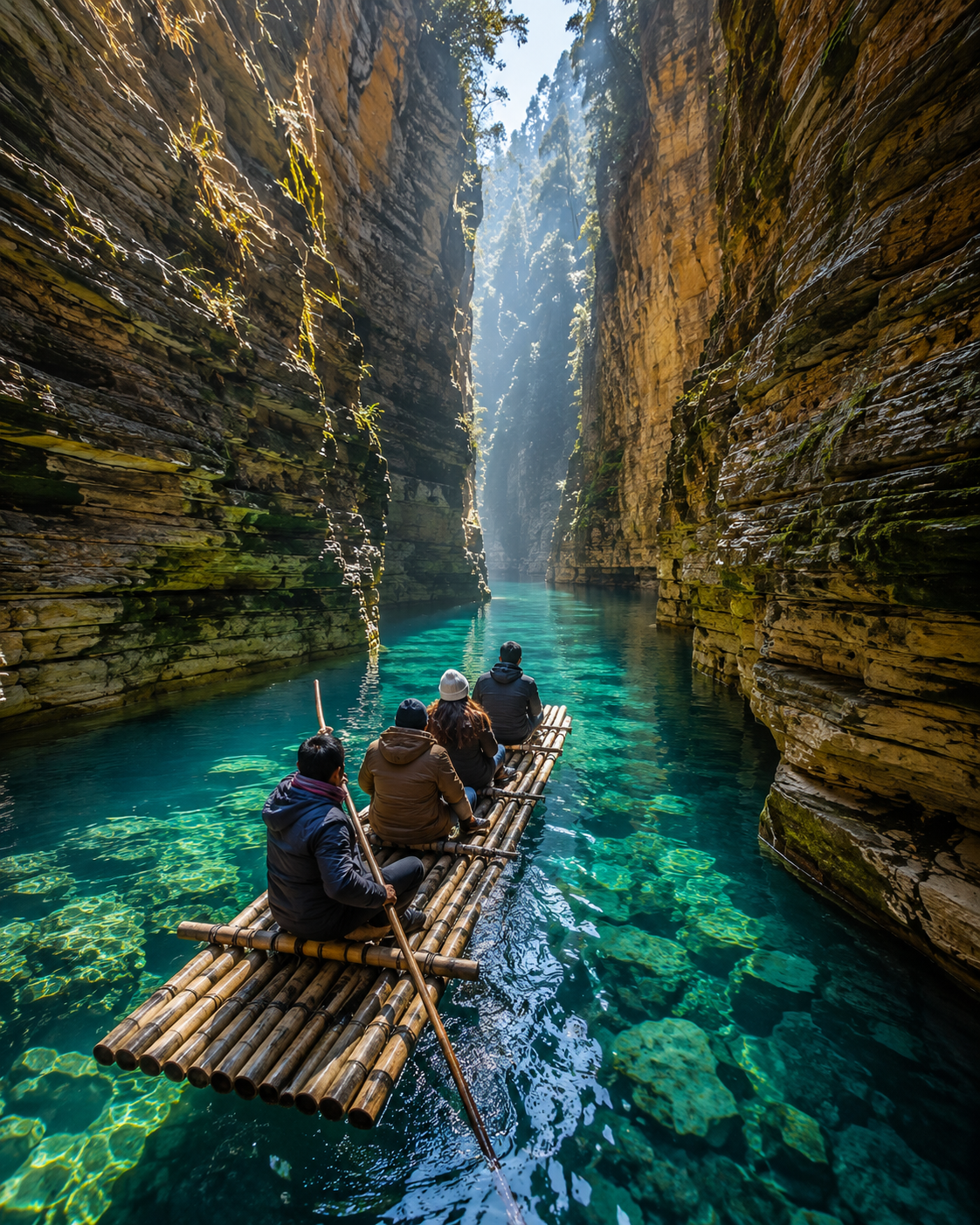
- Strategic Pro Tip: To experience the signature turquoise glow inside the canyon, plan your bamboo raft entry between 10:30 AM and 1:30 PM, when the sun passes directly over the narrow gorge opening.
1. The Geographic Baseline: Wari Chora’s Hydrological Cycle
To plan an expedition to Wari Chora, you must understand the unique geography of the South Garo Hills. Unlike the open riverbanks of Dawki or the high ridges of Shillong, Wari Chora is a narrow, deep slot canyon carved through limestone beds by the Rongdik River. Because the rock walls rise vertically over 100 feet on either side and narrow down to just a few feet across in certain sections, the entire canyon environment functions as a natural funnel for the surrounding hills.
This specific layout means that even minor rain showers miles away can cause rapid changes in water levels and safety inside the canyon. At BREEZIAH, we track these seasonal shifts carefully, structuring our custom itineraries around the region's natural cycles to ensure your journey is both awe-inspiring and completely safe.
2. The Peak Window (November to February): The Crystalline Phase
This is the undisputed premier window to visit Wari Chora. As the monsoon rains completely clear by late autumn, the mud runoff settles, and the Rongdik River calms into a slow, steady flow.
The Visual Transformation
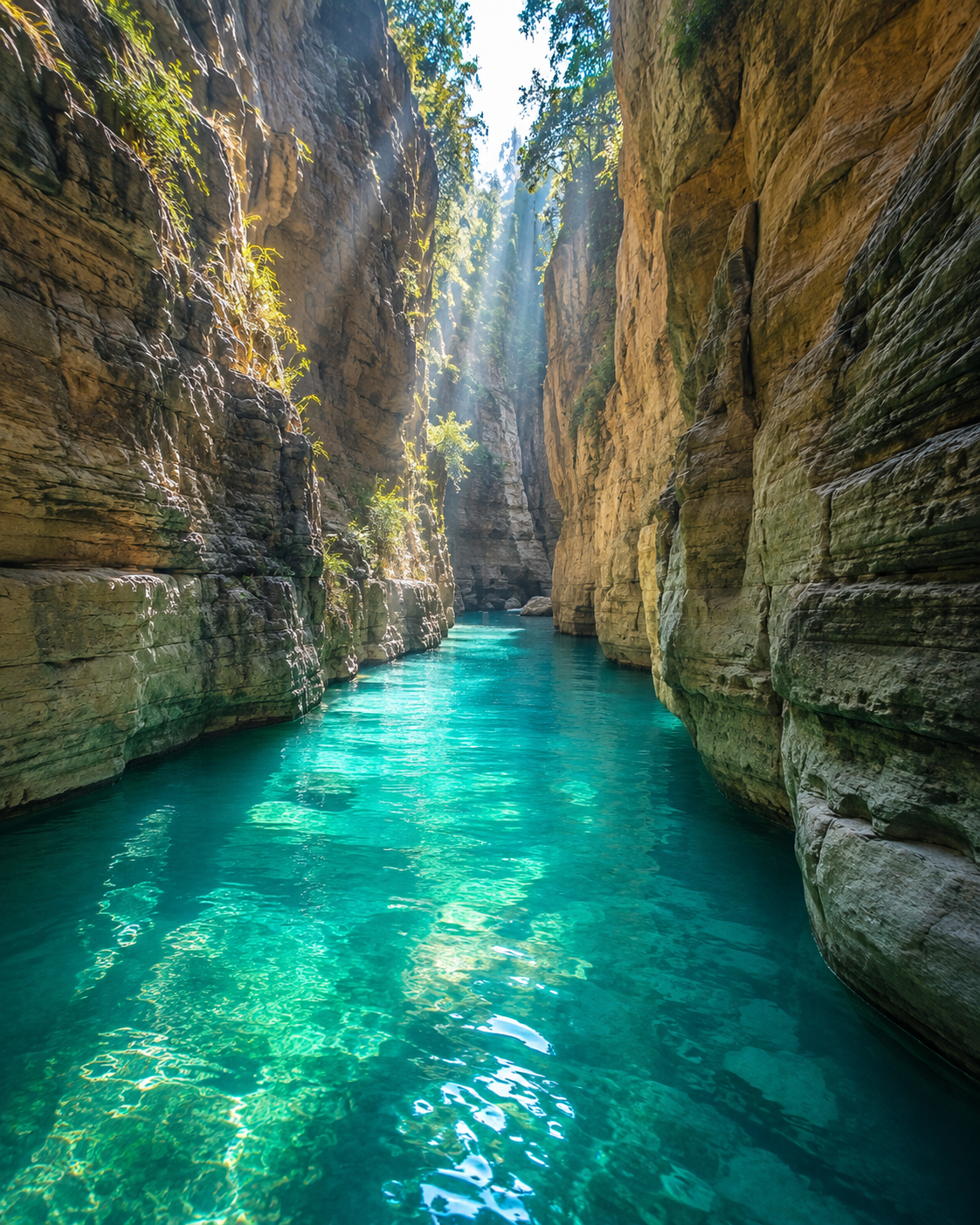
During these winter months, the water inside the slot canyon turns an incredible, deep turquoise green. The water becomes so clear that you can easily spot the natural rock formations and fish moving along the riverbed. The lower water levels expose small pebble beaches within the canyon, making it easy to hop off your bamboo raft and explore the stone arches on foot.
Climate Parameters
The daytime weather in the South Garo Hills during winter is exceptionally comfortable, hovering between a pleasant $22^\circ\text{C}$ and $26^\circ\text{C}$. The air is crisp, and the humidity drops significantly compared to the lower plains of Assam. However, because the deep canyon floors receive very little direct sunlight, the air and water inside the gorge remain chilly—demanding quick-drying apparel.
- Internal Link: To see how this winter peak integrates into a broader multi-district journey, explore our managed 7-Day Meghalaya Itinerary: Caves, Waterfalls, and Crystal Rivers.
3. The Shoulder Window (March to April): The Pre-Monsoon Transition
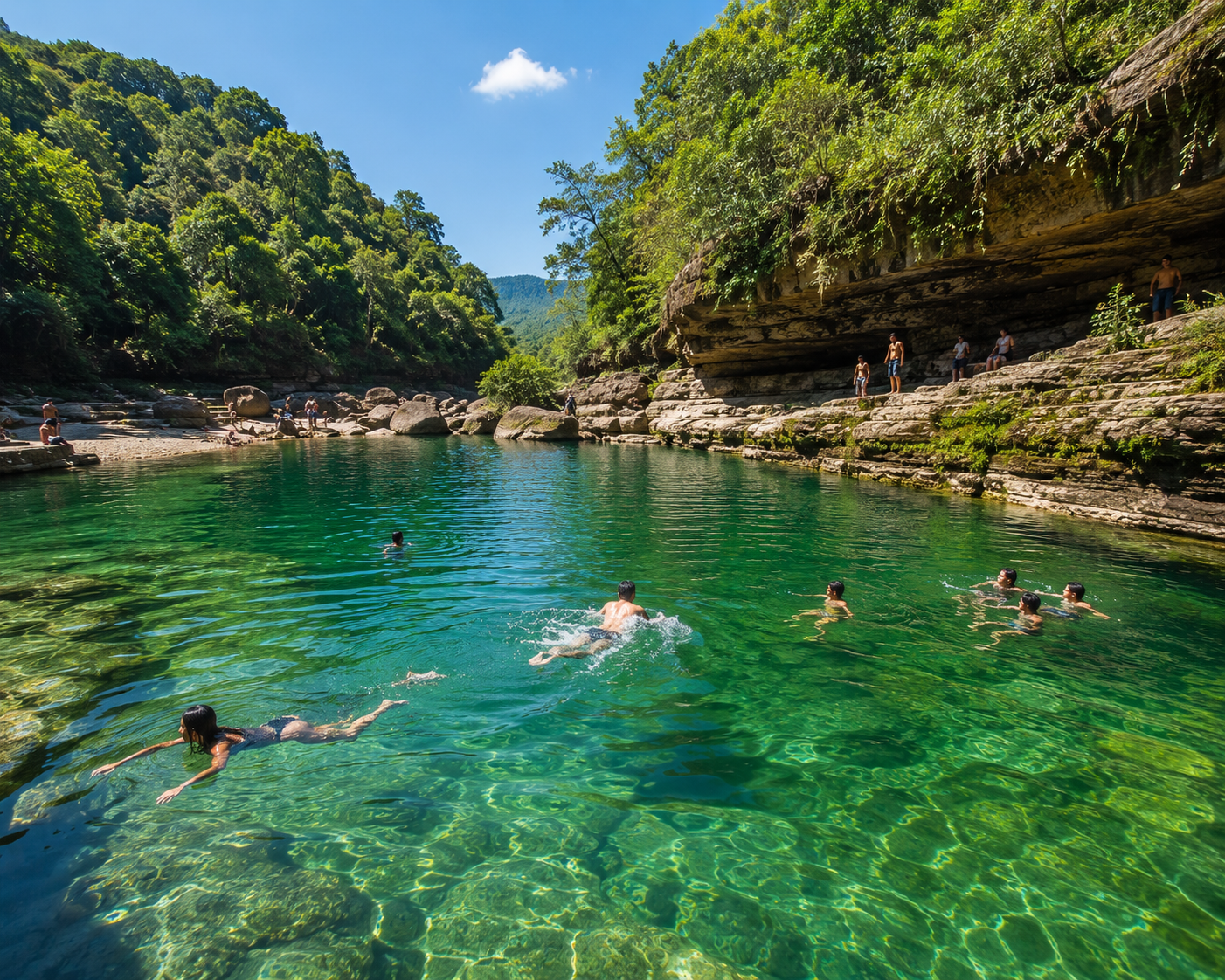
As spring arrives on the plateau, the weather gets warmer, making it a great time for travelers who want to swim in the deep pools outside the main canyon.
The Shifting Conditions
Daytime temperatures in March and April rise between 28°C and 38°C .This warmth makes the cool river water incredibly refreshing. However, this period also brings the arrival of unpredictable pre-monsoon showers. A single heavy evening thunderstorm can temporarily stir up river sediment, shifting the water from its clear turquoise state to a cloudy green within a few hours.
The Travel Strategy
If you are planning your trip during this shoulder window, your itinerary needs to be flexible. At BREEZIAH, our field office works closely with local Garo village lookouts in Emangre. If a sudden pre-monsoon shower affects the upper river basin, we smoothly adjust your daily schedule—shifting your morning track to hidden local caves or waterfalls while the canyon water clears.
- Internal Link: Unsure if you should target this canyon or the Jaintia borderlands during spring? Read our detailed head-to-head analysis: Wari Chora vs. Dawki: Which Water Adventure is Right For You?.
4. The Closed Window (May to September): The Monsoon Surge
Wari Chora is completely closed to tourism during the monsoon season. This is a strict safety policy enforced by both the local village councils and professional tour operators.
[Heavy Plateau Rain] ===> [Canyon Bottleneck] ===> [Violent Flash Flood Surge] (Entry Forbidden)
Meghalaya receives some of the highest rainfall volumes on earth. When these torrential rains hit the South Garo Hills, the narrow limestone walls of Wari Chora become incredibly dangerous. The water level inside the gorge can rise by several feet in minutes, creating a fast, violent current trapped between sheer rock faces with no emergency exit paths. The turquoise river turns into a muddy torrent, and the canyon paths remain closed until the monsoon completely passes.
- Internal Link: If you find yourself in the state during these wetter months, you can still experience incredible landscapes by reviewing our Monsoon Travel Guide to Cherrapunji: The Luxury of Rain.
5. The Awakening Phase (October): Post-Monsoon Exploration
October serves as the transitional month when the local village headmen (Rangbah Shnong) cautiously reopen the paths leading down to the riverbed.
The Raw Jungle Experience
Visiting Wari Chora in October is an adventure suited for those who love raw, untamed nature. The surrounding subtropical jungle is incredibly lush and green after months of heavy rain. The waterfalls cascading directly off the canyon cliffs are at their maximum volume, creating a dramatic backdrop of mist and sound inside the gorge.
The Trade-Offs
Because the river is still draining the last of the monsoon rains, the water levels remain high, and the current can be strong. The water will not have achieved its calm winter clarity yet, appearing more like a deep jade green than bright turquoise. This month demands good physical fitness, as the jungle trails down from the ridge line can be slick and muddy.
- Internal Link: Learn how to pack for these damp conditions by reviewing our Meghalaya Packing List for Monsoon and Winter Transitions.
6. Daily Logistics: The Best Time of Day to Enter the Gorge
Pacing your trip isn't just about picking the right month; it also requires precise daily timing to catch the canyon's best light.
Because the rock walls of Wari Chora are so tall and close together, the canyon floor remains in deep shadow for most of the day. The optimal window to enter the gorge runs from 10:30 AM to 1:30 PM. During these midday hours, the sun passes directly overhead, sending shafts of light straight down through the canopy to illuminate the turquoise water. This creates a beautiful contrast of light and shadow that is perfect for photography.
7. The Packing Checklist Matched to the Season
To navigate the rugged riverbanks and canyon trails comfortably, your gear choices must provide a Solid Foundation for seasonal conditions:
- For the Winter Peak (Nov–Feb): Bring lightweight thermal liners or quick-drying activewear. The air inside the shaded canyon feels cool, and a lightweight windbreaker jacket will keep you comfortable on the bamboo rafts.
- For the Spring Shoulder (Mar–Apr): Pack breathable UV-protection shirts and rash guards. The sun is intense outside the gorge, and you will likely spend extra time swimming in the open river basins.
- Footwear Architecture (All Seasons): Standard sneakers or slip-on sandals will fail on this terrain. You need a dedicated pair of high-traction amphibious water shoes or rugged trail sandals with deep rubber grips to navigate slick limestone boulders safely.
- Waterproof Protection: A 20L to 30L roll-top dry bag is mandatory year-round to protect your camera gear, phones, and extra clothing layers from river splashes and canyon drips.
8. Terrain Logistics & Private 4x4 Safety Realities
The journey to the South Garo Hills is an adventurous road trip in itself. Wari Chora is located away from the main commercial state highways, meaning the final driving legs involve rough, unpaved dirt tracks.
Vehicle Selection
Do not attempt to travel to this region in a standard compact car or a low-clearance sedan. Navigating the steep inclines and rocky terrain leading to the base village of Emangre requires a high-clearance SUV. At BREEZIAH, we ensure your journey is smooth and secure by utilizing premium 4x4 vehicles driven by local pilots who know the terrain inside out.
The Complete Circuit Strategy
Because Wari Chora requires a dedicated journey to reach, we recommend combining it with a wider exploration of Meghalaya's deep wilderness nodes—such as the massive subterranean chambers of Krem Chympe or wildlife safaris in neighboring Assam.
- Internal Link: Review our turn-key, fully managed tour circuit: 8D7N Meghalaya Explorer with Wari Chora Canyon Tour.
- Internal Link: Looking for a larger wilderness loop? Browse our combined Meghalaya with Kaziranga Wildlife Tour Package.
9. Community Guardianship: Clan Governance in the Garo Hills
Wari Chora is far more than a scenic wonder; it is a sacred natural monument protected by the ancestral indigenous Achik (Garo) clans of Emangre village.
The local community cooperative manages all entry logs, maintains the bamboo rafts, and assigns local youth guides to accompany every traveler. Traditional laws require visitors to maintain a respectful, quiet demeanor inside the gorge to avoid disturbing the natural serenity of the canyon. When you book your journey through BREEZIAH, your tour directly supports this community-first model—ensuring your entry fees fund village schools, clean water projects, and forest conservation efforts.
10. Frequently Asked Questions (FAQ)
Helpful Answers
Frequently Asked Questions
Q: Can I visit Wari Chora in June if I bring professional rain gear?
A: No. Wari Chora is completely closed by local authorities in June due to extreme flash flood hazards. No local guides or bamboo rafts are permitted to enter the river basin during this high-risk monsoon period.
Q: Is the water inside Wari Chora always turquoise green?
A: The water achieves its signature crystal-clear turquoise tone exclusively during the dry winter window from November to February. During the transitional months of October and April, higher water volumes and seasonal silt shift the coloration to a rich jade green.
Q: How do I track real-time weather safety for the canyon?
A: At BREEZIAH, our operations desk monitors regional weather patterns and communicates directly with our local contacts in Emangre village daily, ensuring your 4x4 transit is perfectly timed for clear, safe canyon conditions.
- Discover our customizable booking options by visiting our Plan My Trip Portal.
Ready to witness the deep turquoise magic of the hidden canyon?
At BREEZIAH, we don’t build generic holidays; we craft premium, structurally sound expeditions designed to foster deep human connection and unforgettable adventure. Let us handle the private 4x4 logistics, certified community connections, and boutique homestay bookings while you immerse yourself in the magic of the hills.
Explore Our Tour Packages | Build Your Custom Itinerary | Read Our Guest Reviews
Plan This Journey
Turn this Meghalaya guide into a trip that fits your pace
If this guide is part of the kind of holiday you want, Breeziah can help shape the route, travel flow and stay style around your dates, comfort level and destination priorities.