- Where
- Nongriat village, East Khasi Hills
- Altitude
- About 500–700 m, far below Sohra
- Distance
- Trek starts at Tyrna, about 11 km (30 minutes) from Sohra
- Timings
- Daylight; start the trek by 8–9am
- Entry fee
- Small fee, reported as ₹20–100, plus camera charges
- Permit
- None. Registered local guides available at Tyrna
- Best time
- October–March for dry steps
- Time needed
- 5–7 hours return, or stay a night in Nongriat
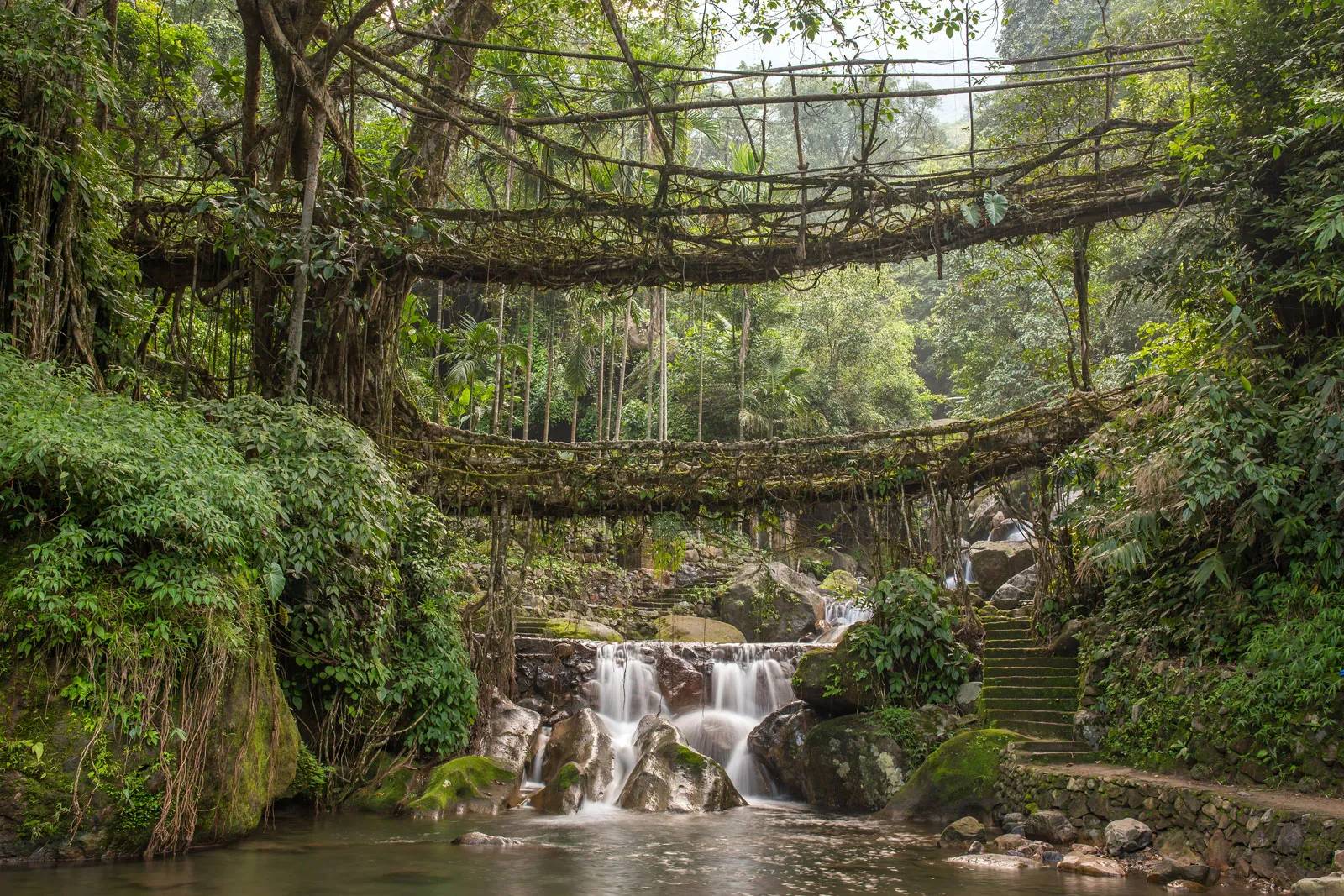
The double-decker living root bridge at Nongriat is two bridges, one above the other, grown from the aerial roots of rubber fig trees (Ficus elastica) that Khasi villagers have trained across a stream over generations. It is the most famous of Meghalaya's living root bridges, and the steep trek down to it is one of the best days in Northeast India.
How living root bridges are made
Villagers guide the young roots of a rubber fig across a stream, sometimes along a frame of bamboo or betel-nut trunks, and let them grow and fuse over decades until they can carry people. As long as the tree is healthy, the roots keep thickening, so the bridge gets stronger with age. Some can carry 50 people at once and last for centuries.
- First written record: Henry Yule described Sohra's root bridges in 1844.
- How many: researchers geo-located 75 living bridges in 2017.
- Khasi myth: the ancestors came down to earth on a living-root ladder, jingkieng ksiar.
- Heritage status: the root bridge cultural landscapes were added to India's UNESCO tentative list in 2022.
The trek
- Start: Tyrna village, 30 minutes by car from Sohra.
- Steps: roughly 3,000 to 3,500 stone steps down, and the same back up.
- On the way: the single-decker root bridge and two steel suspension bridges over rocky rivers.
- Time: 1.5 to 2.5 hours down, longer back up. Allow 5 to 7 hours in total.
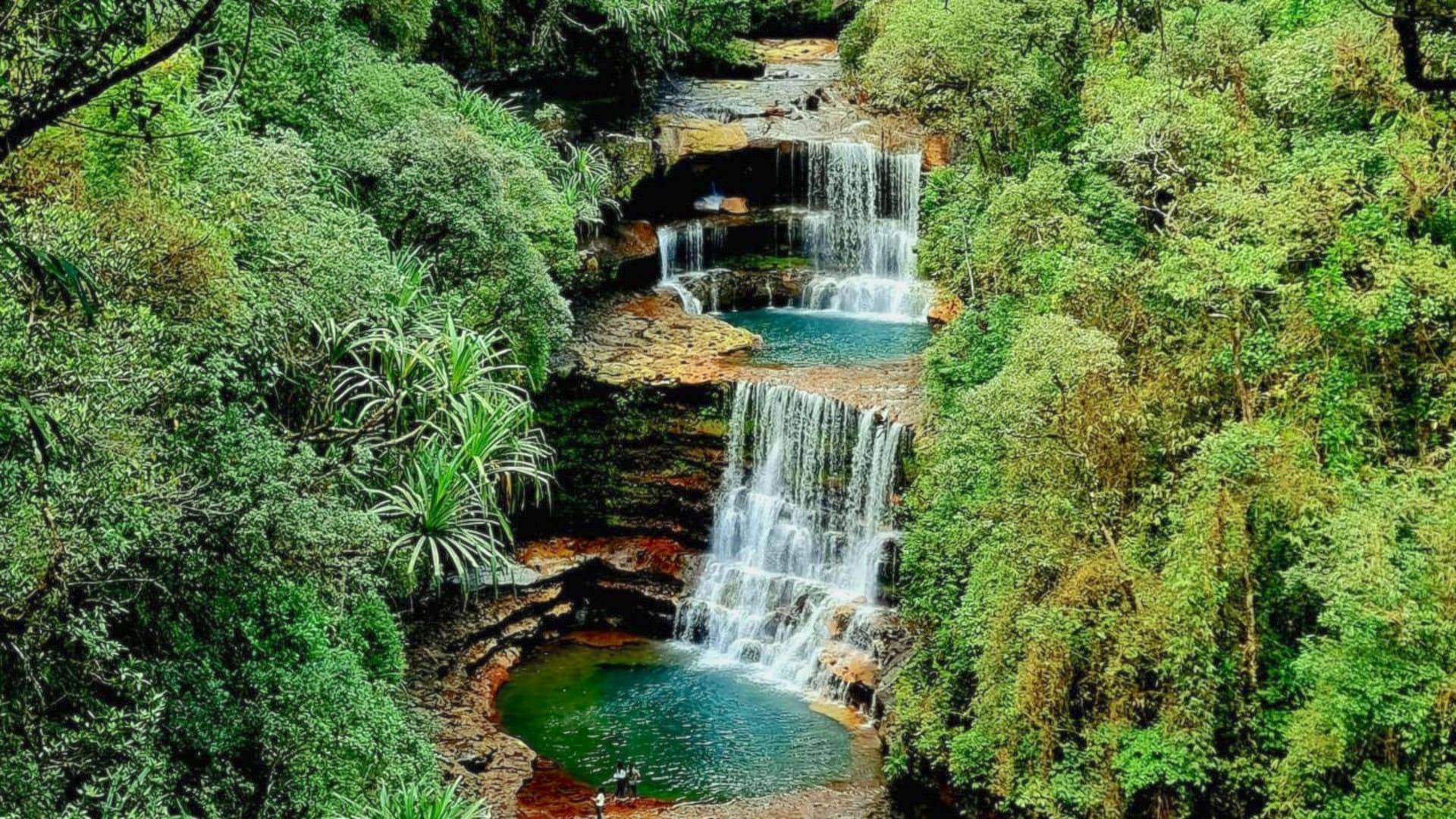
- Rainbow Falls: about an hour beyond the double-decker, with a blue pool. A separate small fee may apply.
| From | Road distance | Usual drive time |
|---|---|---|
| Sohra (Cherrapunji) | about 10 km | 30 min to Tyrna |
| Shillong | about 65 km | 2 hrs to Tyrna |
| Guwahati Airport | about 175 km | 5 hrs to Tyrna |
Road distances from OpenStreetMap routing. Drive times are what we see on these mountain roads, not map estimates.
See our Shillong to Cherrapunji cab page and top living root bridges in Meghalaya.
Fees, guides and rules
- Entry: a small fee reported as ₹20 to ₹100, plus camera charges. Cash only.
- Guides: registered village guides can be hired at the registration desk in Tyrna. Some 2025 reports say a guide is now required; others say it's optional. Ask at Tyrna.
- ID: keep government photo ID handy.
- Sundays: some community-run sites in the Khasi Hills keep shorter hours on Sundays; check before you go.
When to go
The ten-year record shows the steps are driest from November to March. April to September brings heavy rain, which makes the rivers spectacular and the steps slippery.
| Month | Avg high | Avg low | Rain |
|---|---|---|---|
| Jan | 19°C | 10°C | Dry |
| Feb | 21°C | 11°C | Dry |
| Mar | 25°C | 15°C | Light |
| Apr | 26°C | 18°C | Wet |
| May | 26°C | 20°C | Wet |
| Jun | 26°C | 22°C | Very wet |
| Jul | 27°C | 22°C | Very wet |
| Aug | 27°C | 22°C | Very wet |
| Sep | 27°C | 21°C | Wet |
| Oct | 26°C | 19°C | Light |
| Nov | 24°C | 14°C | Dry |
| Dec | 21°C | 11°C | Dry |
Monthly averages for 2015–2024 from ERA5 reanalysis via Open-Meteo, at the site's elevation (about 686 m). Rain and snow are rated relative to this location's own year.
Staying in Nongriat
Simple homestays in Nongriat let you split the climb, see Rainbow Falls without rushing, and have the bridge to yourself in the early morning before day trekkers arrive.
Things most guides don't tell you
- The climb back is the hard part. Start by 8 or 9am so you're out before dark.
- Wear shoes with grip and carry water; there are small shops on the trail but not many.
- Knees, not lungs. The descent is hard on knees; a trekking pole helps.
- With kids? Fit older children manage well. It's tough for young children and anyone with knee problems.
- Leave the roots alone. Don't pull or carve them; the bridge is alive.
Nearby
Double-Decker Living Root Bridge: questions travellers ask
How many steps are there to the double-decker root bridge?
Roughly 3,000 to 3,500 stone steps down from Tyrna, and the same back up.
How long does the double-decker root bridge trek take?
1.5 to 2.5 hours down and longer back up. Allow 5 to 7 hours in total, more with Rainbow Falls.
Is there an entry fee at the double-decker root bridge?
Yes, a small fee reported as ₹20 to ₹100, plus camera charges.
Do I need a guide for the double-decker trek?
Registered guides are available at Tyrna. Some reports say a guide is now required; check at the registration desk.
How far is the double-decker root bridge from Cherrapunji?
The trek starts at Tyrna, about 11 km (30 minutes) from Sohra.
How far is the double-decker root bridge from Shillong?
Tyrna is about 63 km from Shillong, around 2 hours by road.
How old is the double-decker root bridge?
Its exact age isn't recorded. Living root bridges take decades to become usable and can last for centuries.
Can kids do the double-decker trek?
Fit older children can. It's demanding for young children and anyone with knee problems.
What is the best time to visit the double-decker root bridge?
October to March, when the steps are drier.
Sources
- Wikipedia: Living root bridge
- Lonely Planet: Nongriat root bridges
- Trawell: Nongriat double-decker bridge
- Northeast Tours Packages: double-decker trek 2026
Timings and fees change. Check on the day, or ask us when you book.