
Where to See Snow in Sikkim: Best Places and Months (2026-27)
The best places to see snow in Sikkim, from Tsomgo Lake and Nathu La to Zero Point and Yumthang, with the right months, permits and what to do if roads close.
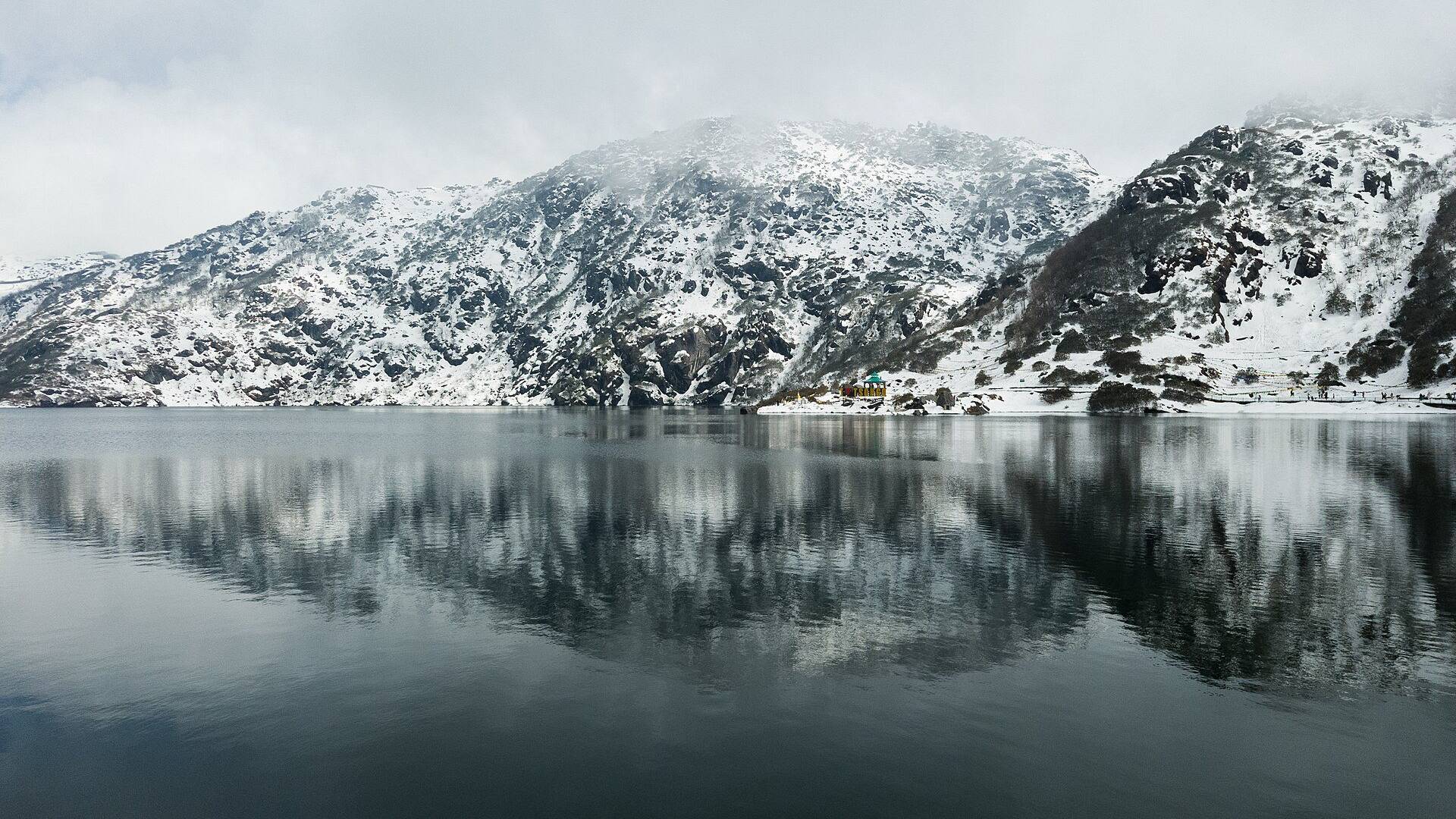
The best places to see snow in Sikkim are Tsomgo (Changu) Lake and the road to Nathu La in East Sikkim, and Zero Point (Yumesamdong), Yumthang Valley and Gurudongmar Lake in North Sikkim. Snow usually starts in December, is heaviest in January and February, and stays on the high ground until April.
Gangtok itself rarely gets snow. You go up from Gangtok on a day trip to Tsomgo, or on a two or three-night trip to North Sikkim. Both need permits, and both can close for a day or more after heavy snowfall, so build some slack into your plan.
| Place | Area | Height (approx.) | From Gangtok | Snow season |
|---|---|---|---|---|
| Tsomgo (Changu) Lake | East Sikkim | 3,750 m | 1.5 to 2 hours | December to April |
| Nathu La and Baba Mandir | East Sikkim | 4,300 m | 2.5 to 3 hours | December to April |
| Zuluk and the Old Silk Route | East Sikkim | 2,800 to 4,000 m | 4 to 5 hours | December to March |
| Yumthang Valley | North Sikkim | 3,560 m | Overnight via Lachung | December to March |
| Zero Point (Yumesamdong) | North Sikkim | 4,700 m | Overnight via Lachung | Most of the year, deepest in winter |
| Gurudongmar Lake | North Sikkim | 5,400 m | Overnight via Lachen | Frozen in winter, access depends on weather |
When does it snow in Sikkim?
| Month | What to expect |
|---|---|
| November | Cold and clear. Light snow on the highest points only. |
| December | First proper snowfalls at Tsomgo, Nathu La and Zero Point. Roads mostly open. |
| January | Heavy snow. The best chance of a white landscape, and the highest chance of closures. |
| February | Heavy snow continues. Closures still common after fresh snowfall. |
| March | Plenty of snow on the ground and more stable roads. A good month for families. |
| April | Snow at Zero Point and around Tsomgo, with rhododendrons starting lower down. |
If seeing snow is the main reason for your trip, go between mid-January and mid-March. If you are travelling at Christmas or New Year, you will usually see snow at Tsomgo and Zero Point, but fresh falls are not guaranteed.
1. Tsomgo (Changu) Lake
Tsomgo Lake is the easiest snow trip in Sikkim. It is a glacial lake about 38 km from Gangtok, and in winter the mountains around it are white and the edges of the lake often freeze. Most visitors do it as a half-day or full-day trip, combined with Nathu La or Baba Mandir.
- Permit: needed for all visitors. Your Gangtok travel agent or hotel arranges it the day before.
- Vehicle: only registered local taxis are allowed on this road.
- Tip: yak rides and snow-boot hire are available at the lake. Agree the price before you start.
2. Nathu La and Baba Mandir
Nathu La is the mountain pass on the India-China border, past Tsomgo Lake. It is usually covered in snow in winter. Only Indian nationals can visit, with a permit arranged through a registered Gangtok operator. Our Nathu La permit guide covers the documents and the days it is closed.
After heavy snowfall, the road from Tsomgo to Nathu La and Baba Mandir is often closed for a few days. On those days, permits are issued only up to Tsomgo, or not at all.
3. Zero Point (Yumesamdong)
Zero Point is the highest point most visitors reach in North Sikkim, about 23 km beyond Yumthang Valley. It is the surest place in Sikkim to see snow: it has snow for much of the year, and in winter the whole valley is white.
- How to get there: stay overnight in Lachung, then drive up early in the morning.
- Permit: a protected area permit for North Sikkim, arranged by your operator.
- Altitude: at about 4,700 m, it is very high. Spend a short time, walk slowly and come down if you feel unwell.
4. Yumthang Valley
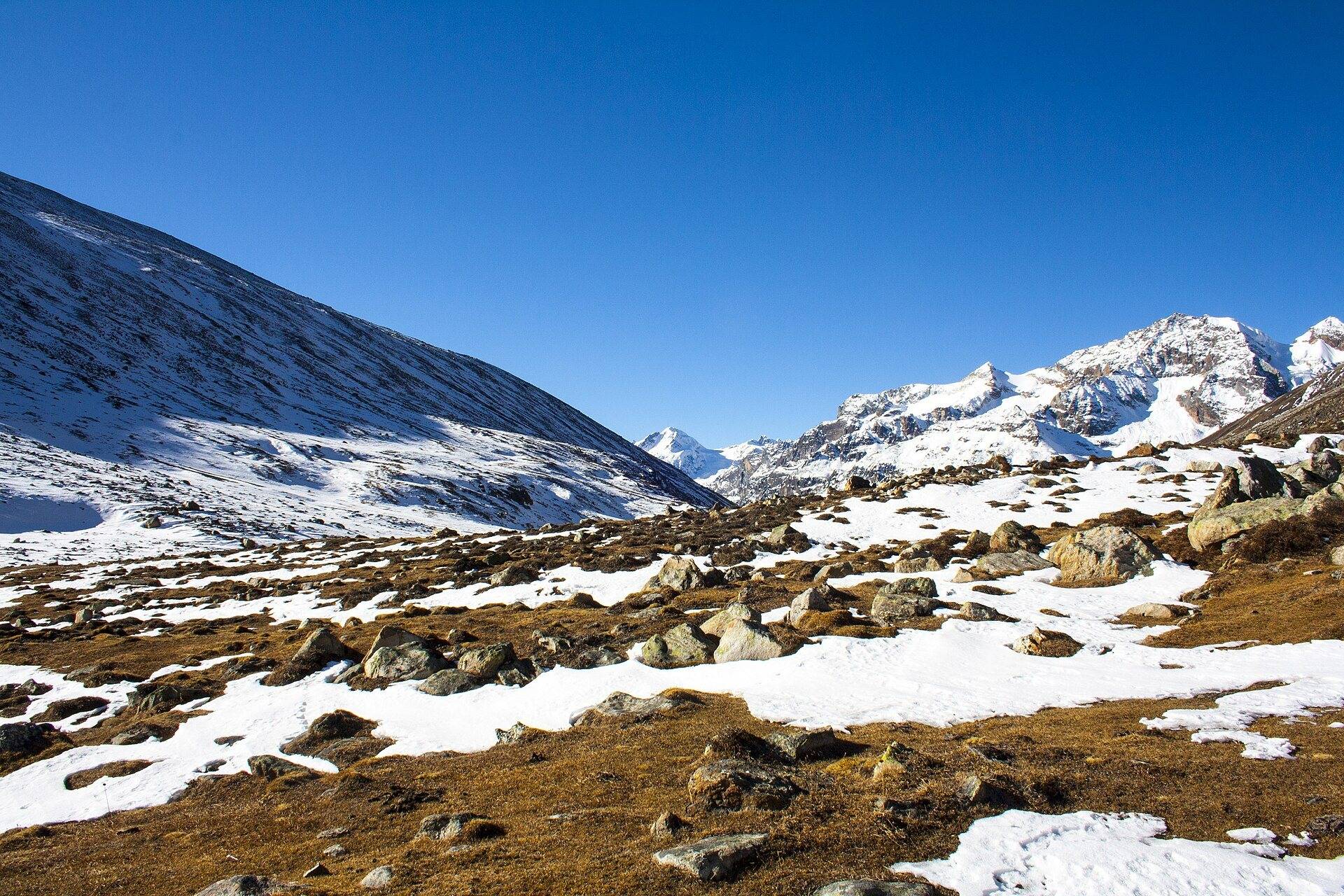
Yumthang is the valley of flowers in spring and a valley of snow in winter. It lies about 25 km from Lachung at about 3,560 m. In January and February the valley floor and the slopes are usually covered in snow, and the river runs between white banks. See our things to do in Lachung for the rest of the trip.
5. Gurudongmar Lake
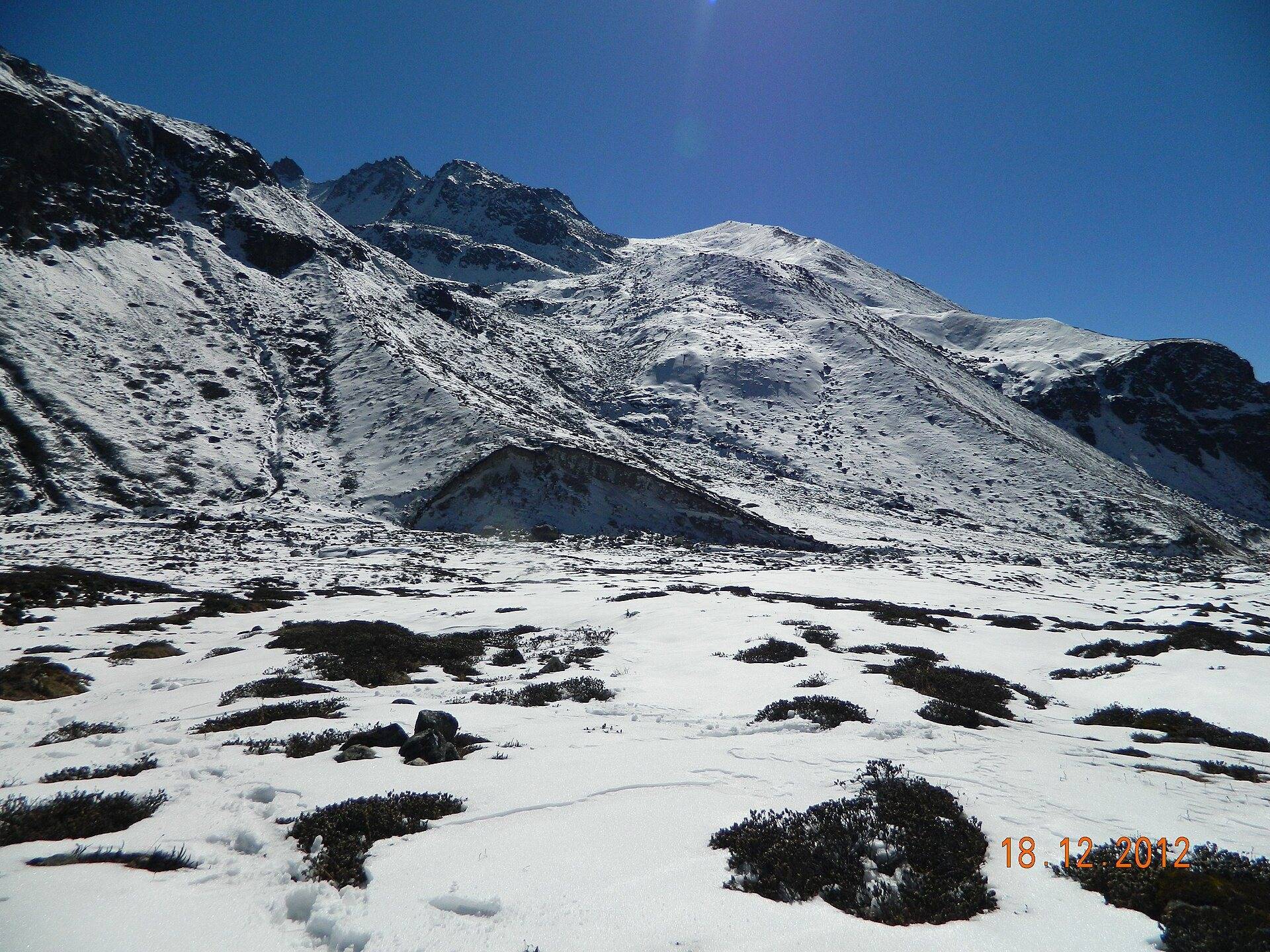
Gurudongmar is one of the highest lakes in the world, at about 5,400 m, reached from Lachen. In winter it freezes over, and the drive up passes through snowfields. It is spectacular, but it is also the trip most likely to be cancelled in winter because of snow on the road, and the altitude is hard on the body. Do it only with a night in Lachen first, and skip it if anyone in your group has heart or breathing problems. Our Lachen guide has more.
6. Zuluk and the Old Silk Route
Zuluk, on the old trade route between Sikkim and Tibet, is famous for its zigzag road. In winter the upper part of the route, towards Thambi Viewpoint and Kupup, gets snow. It is a quieter alternative to Tsomgo, with homestays in Zuluk village. See our Old Silk Route guide.
Permits and road closures
Most snow spots in Sikkim are in protected areas, so you cannot drive up on your own.
- How permits work: your registered Gangtok operator applies with your ID and photos. Permits for Tsomgo and Nathu La are usually issued a day ahead.
- Snow closures: after heavy snow, the police stop issuing permits for Tsomgo and Nathu La until the road is cleared. In past winters, North Sikkim permits stayed open on some of those days, so it can work as a backup.
- Foreign nationals: can visit Tsomgo and some of North Sikkim with the right permit, but not Nathu La.
- Carry ID: a passport, voter ID or driving licence, plus passport-size photos.
Tips for a snow trip
- Keep a spare day. If your Tsomgo day is cancelled, you can try again the next day.
- Start early. Snow roads are best in the morning. Afternoons bring cloud and slush.
- Dress in layers. Thermal innerwear, a fleece, a down or padded jacket, gloves, a cap and waterproof shoes. Snow boots can be hired at Tsomgo.
- Mind the altitude. Drink water, avoid alcohol the night before, and do not run in the snow at 4,000 m.
- Wear sunglasses. The glare from snow is strong, even on cloudy days.
Our Sikkim packing list and is Sikkim safe guide go into more detail.
See the snow with Breeziah
Our North Sikkim with Gurudongmar Lake trip is 7 days with Lachen, Lachung, Yumthang and Zero Point. For a shorter trip, the Gangtok, Lachung and Yumthang package covers Tsomgo, Yumthang and Zero Point in 6 days, from Rs 19,999 per person. We arrange all permits and keep a spare day in winter plans.
Helpful Answers
Frequently Asked Questions
Which month is best to see snow in Sikkim?
January and February have the most snow, but also the most road closures. Mid-January to mid-March is the best balance, and March is often easier for families because the roads are more stable.
Does it snow in Gangtok?
Rarely. Gangtok is at about 1,650 m and only gets snow in unusual years. To see snow, go up to Tsomgo Lake, Nathu La or North Sikkim.
Where is the nearest snow to Gangtok?
Tsomgo (Changu) Lake, about 38 km and 1.5 to 2 hours away, is the nearest reliable snow point in winter.
Is Zero Point open in winter?
Usually yes, as a day trip from Lachung, but it can close for a day or more after heavy snowfall. Your operator will confirm on the day.
Do I need a permit to see snow in Sikkim?
Yes. Tsomgo Lake, Nathu La and North Sikkim all need permits, arranged through a registered travel operator in Gangtok with your ID and photos.
Can foreigners visit Nathu La?
No. Nathu La is open only to Indian nationals. Foreign visitors can go to Tsomgo Lake and parts of North Sikkim with the right permits.
Plan This Journey
Turn this Sikkim guide into a trip that fits your pace
If this guide is part of the kind of holiday you want, Breeziah can help shape the route, travel flow and stay style around your dates, comfort level and destination priorities.