
- Where
- Between Tsomgo Lake and Nathu La, East Sikkim
- Altitude
- About 4,000 m (13,100 ft)
- Distance
- About 55–60 km from Gangtok, 2.5–3 hours
- Timings
- Roughly 8am–2:30pm (permit day trips return by early afternoon)
- Entry fee
- Free
- Permit
- Protected Area permit via a registered Gangtok operator; Indian nationals only
- Best time
- April–June and October–November
- Time needed
- 30–45 minutes
Baba Mandir is the shrine to Harbhajan Singh, a sepoy of the 23rd Punjab Regiment who died near Nathu La in October 1968, aged 22. The Indian Army still treats him as a serving soldier, and almost every Tsomgo Lake and Nathu La day trip from Gangtok stops here.
The legend of the soldier saint
Harbhajan Singh was born in 1946 in Sardarpura, in what is now Pakistan's Punjab, and joined the army in 1966. A board at the shrine says he drowned after falling into a stream while escorting a mule column from Tukla to Dongchui La. His body was found days later, the story goes, after he appeared to a fellow soldier in a dream and showed him where to look.
Soldiers on this frontier began to credit "Baba" with warning them of danger in dreams, and the shrine grew from there. The legend says even Chinese soldiers across the border knew of him, and a chair is said to be set out for him at border flag meetings. For years an empty berth was booked on a train every September to carry his belongings home to Kuka, Kapurthala, with soldiers escorting them. Whatever you make of it, the devotion here is real, and it is unlike any other stop in Sikkim.
Old Baba Mandir and new Baba Mandir
There are two shrines, and it matters which one your driver means.
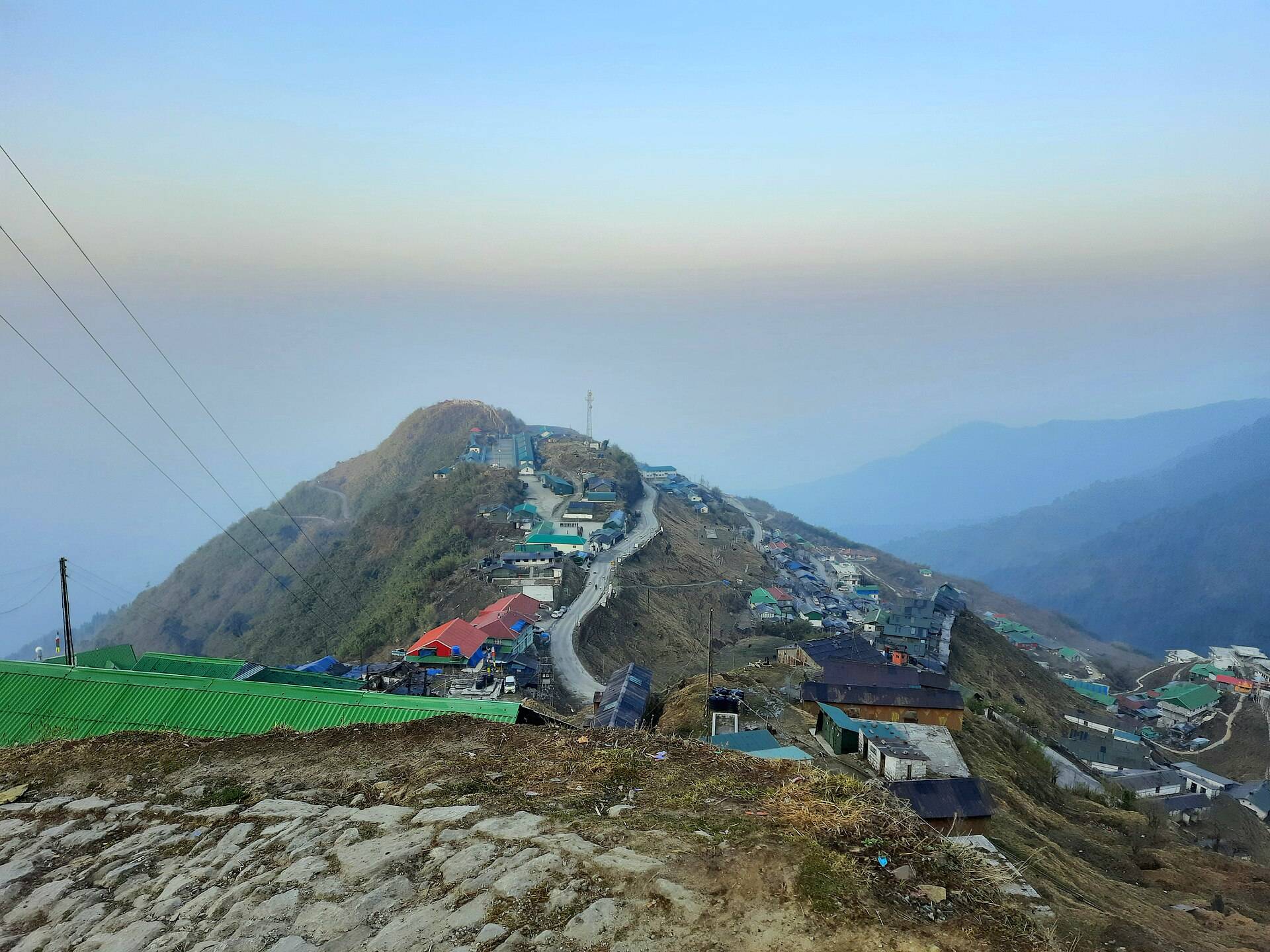
- The new Baba Mandir, built in 1982, is the one on the main road at about 13,100 ft, at the junction for Kupup and Gnathang. This is the stop on standard Tsomgo–Nathu La tours.
- The old Baba Mandir is the bunker where he served, higher up near Kupup at roughly 4,000 m or more (sources disagree). It is reached by a steep path, and it is usually only on the itinerary if you are doing the Zuluk–Gnathang side.
What you'll see
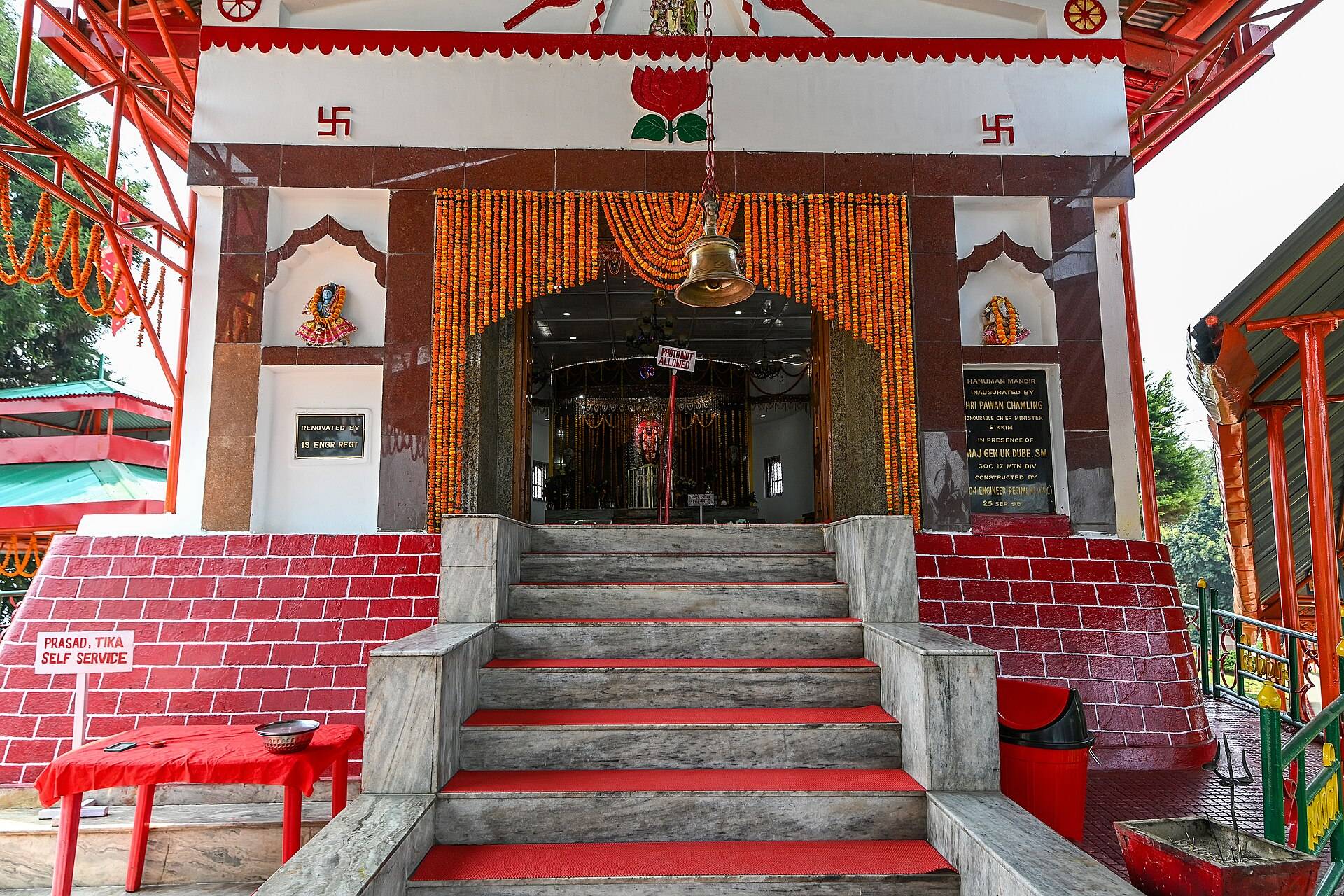
- The shrine itself, with his portrait, uniform and boots, kept polished by the soldiers posted here.
- Bottles of water left by visitors to be blessed and collected later; locals believe the water heals.
- The army souvenir and snack counter next door, with hot tea at 13,000 ft.
How to reach Baba Mandir
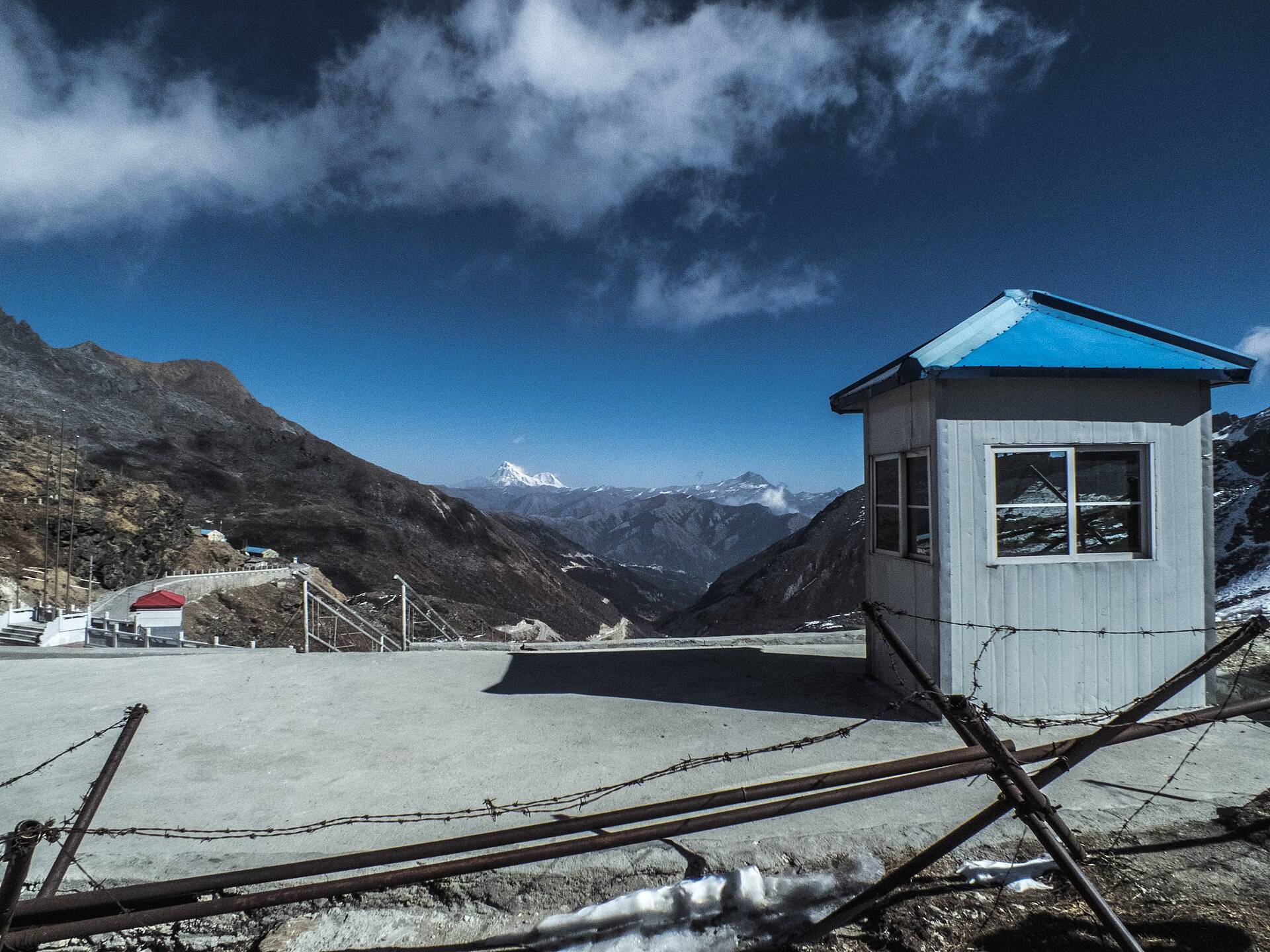
The shrine is on the Jawaharlal Nehru Road beyond Tsomgo Lake, about 55–60 km from Gangtok. Private cars from outside Sikkim cannot go; you take a Sikkim-registered vehicle with a permit arranged by a registered operator, usually a day trip that also covers Tsomgo and, on open days, Nathu La. See our car rental in Gangtok and NJP to Gangtok cab.
| From | Road distance | Usual drive time |
|---|---|---|
| Gangtok | about 60 km | 2.5–3 hrs |
| NJP station | about 175 km | Not a same-day trip; stay in Gangtok |
Road distances from OpenStreetMap routing. Drive times are what we see on these mountain roads, not map estimates.
Permits and rules
- Indian nationals only. Foreigners can visit Tsomgo Lake with a permit but cannot go on to Baba Mandir or Nathu La.
- Apply a day ahead through your operator with a photo ID and two passport photos. Our Sikkim permit guide has the details.
- Permits are cancelled after heavy snow or landslides, sometimes on the morning of the trip.
Weather and best time
At 4,000 m it is cold even in summer, and the ten-year record shows the heaviest snow in March and April, not December.
| Month | Avg high | Avg low | Rain | Snow |
|---|---|---|---|---|
| Jan | -1°C | -8°C | Dry | Some |
| Feb | 0°C | -7°C | Dry | Some |
| Mar | 2°C | -4°C | Light | Heavy |
| Apr | 6°C | 0°C | Light | Heavy |
| May | 8°C | 3°C | Wet | Some |
| Jun | 11°C | 7°C | Very wet | – |
| Jul | 12°C | 8°C | Very wet | – |
| Aug | 12°C | 8°C | Very wet | – |
| Sep | 11°C | 6°C | Wet | – |
| Oct | 8°C | 2°C | Light | Light |
| Nov | 5°C | -2°C | Dry | Some |
| Dec | 2°C | -4°C | Dry | Some |
Monthly averages for 2015–2024 from ERA5 reanalysis via Open-Meteo, at the site's elevation (about 3864 m). Rain and snow are rated relative to this location's own year.
- April–June: roads open, rhododendrons, snow patches by the road.
- October–November: the clearest mountain views.
- January–March: heavy snow; permits are often suspended for a day or two.
Things most guides don't tell you
- Go early. Permit days run on a schedule, and the return from this stretch starts by early afternoon when cloud and fog come in.
- The altitude hits fast. You climb from about 1,600 m in Gangtok to 4,000 m in under three hours. Walk slowly, drink water, and skip the old shrine climb if you feel dizzy. See is Sikkim safe for altitude.
- Remove your shoes before the inner shrine and cover your head as you would in a gurdwara.
Nearby
- Tsomgo Lake, about 18 km back towards Gangtok.
- Nathu La Pass, a few kilometres further up the same road.
- Zuluk and the Silk Route, over the ridge via Kupup and Gnathang (separate permit).
Baba Harbhajan Singh Mandir: questions travellers ask
Why is Baba Harbhajan Singh famous?
He was a Punjab Regiment soldier who died near Nathu La in 1968. Soldiers believe his spirit still guards the border, warning them of danger in dreams, and the army treats him as a serving soldier.
Who built Baba Mandir?
The Indian Army. The current shrine on the main road was built in 1982; the older one is the bunker where he served, higher up near Kupup.
Is Baba Mandir open every day?
The shrine itself is, but you can only reach it on a permit day trip. Tsomgo and Baba Mandir trips run most days; Nathu La is closed to tourists on Mondays and Tuesdays.
Can foreigners visit Baba Mandir?
No. Foreign nationals can get a permit for Tsomgo Lake but not for Baba Mandir or Nathu La.
How far is Baba Mandir from Gangtok?
About 55–60 km, which is 2.5–3 hours each way on the mountain road.
What is the difference between old and new Baba Mandir?
The new Baba Mandir (1982) is on the main road and is the usual stop. The old Baba Mandir is his original bunker, higher up and reached by a steep walk.
Is there snow at Baba Mandir?
Often from December to April. The ten-year weather record shows March and April as the snowiest months here.
Do I need a permit for Baba Mandir?
Yes. It is in a protected area, so your Gangtok operator applies for the permit a day in advance using your photo ID and photos.
Sources
- Wikipedia: Baba Harbhajan Singh
- Incredible India: Baba Harbhajan Singh Memorial
- Ministry of Tourism: Baba Harbhajan Memorial Temple
- Darjeeling Tourism: Baba Mandir
Timings and fees change. Check on the day, or ask us when you book.