Kamakhya Temple History: Why It Is Famous, the Shakti Peetha Legend and the 10 Mahavidya Temples
The story behind Kamakhya Temple in Guwahati: the legend of Sati, why there is no idol, how the Koch kings rebuilt it, and the ten Mahavidya temples on Nilachal Hill.
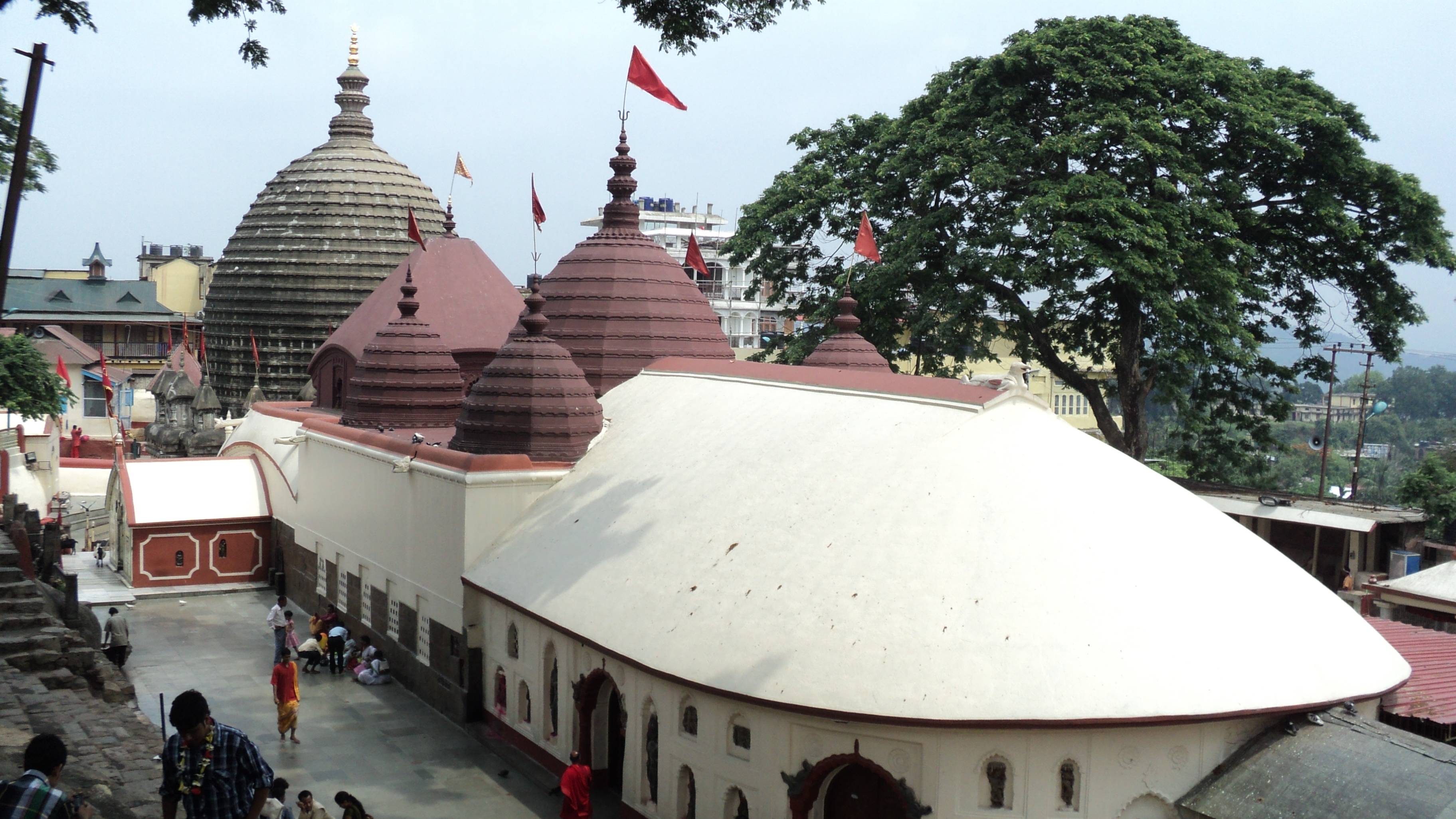
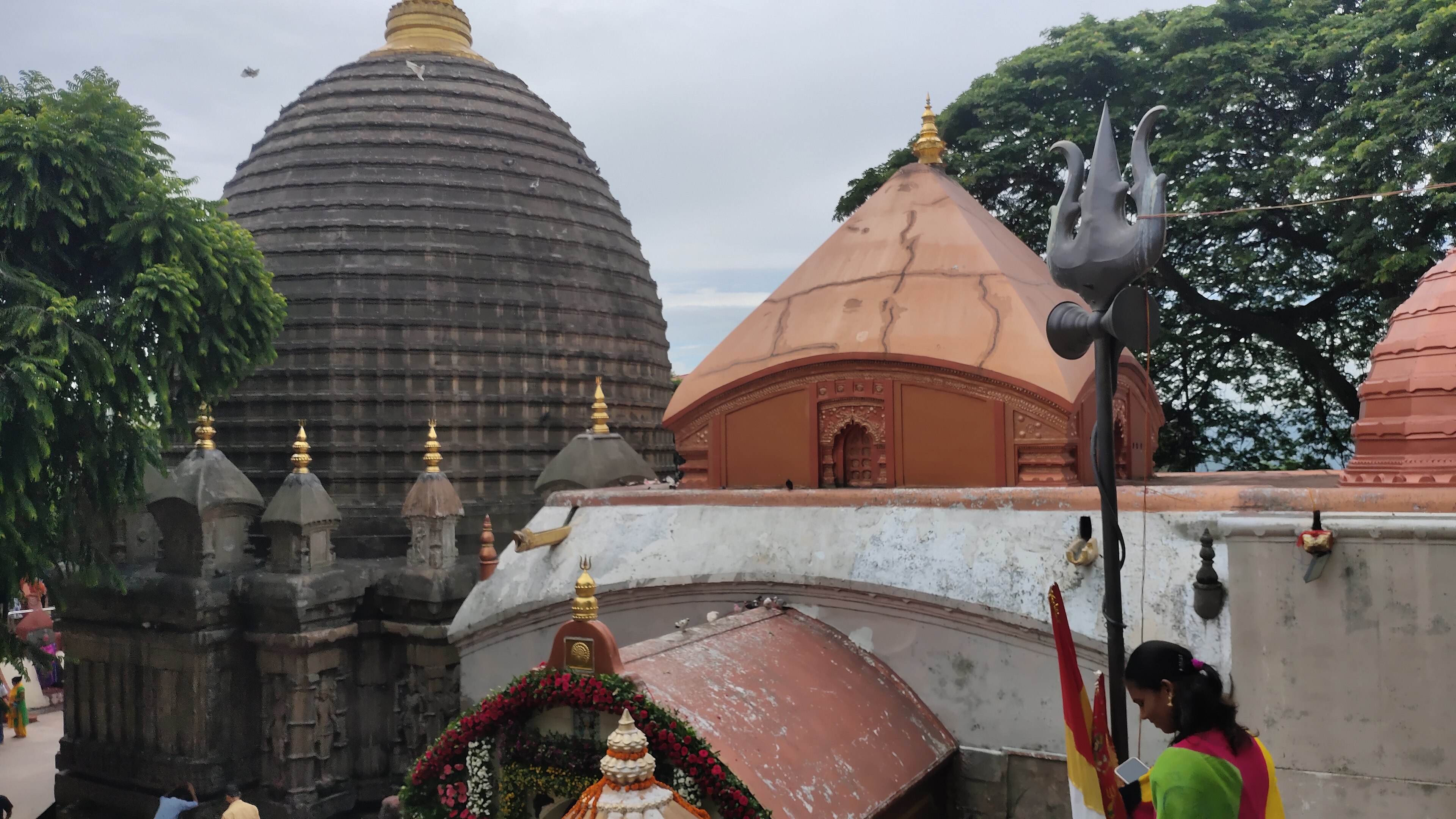
Kamakhya Temple, on Nilachal Hill in Guwahati, is one of the most important temples of the goddess in India. Pilgrims come from across the country for darshan, and tantric practitioners consider it the most powerful seat of Shakti worship.
Knowing the story makes the visit mean much more. This guide covers the legend, the history of the building and the temples around it.
The legend of Sati and the Shakti Peethas
Sati, daughter of King Daksha, married Shiva against her father's wishes. Daksha held a great yagna and invited every god except Shiva. Sati went anyway, and when her father insulted her husband, she gave up her life in the sacrificial fire.
Grief-stricken, Shiva carried her body across the universe in a dance of destruction. To stop him, Vishnu used his Sudarshan Chakra to cut Sati's body into pieces. Each place where a part fell became a Shakti Peetha, a seat of the goddess.
At Kamakhya, the legend says, her yoni fell. That is why Kamakhya is worshipped as the source of creation and why it holds a special place among the Shakti Peethas.
Why there is no idol
Most temples have an idol in the sanctum. Kamakhya does not.
In the garbhagriha, a dark chamber reached by steps going down, the goddess is a cleft in the rock shaped like a yoni. A natural spring keeps it wet all year. The stone is covered with cloth and flowers, and devotees touch the water as blessing.
The sanctum is small, dim and crowded, and you get only a moment inside. Photography is not allowed.
Kamakhya and tantra
Kamakhya has been a centre of tantric worship for well over a thousand years. Texts such as the Kalika Purana and the Yogini Tantra describe the hill and its rituals.
You may still see tantric practitioners, especially during Ambubachi Mela. Animal sacrifice is part of the temple's tradition and is carried out on some days, which surprises some visitors.
A short history of the temple
- Ancient period: inscriptions show Nilachal Hill was a sacred site by the time of the early kings of Kamarupa. Sculptures from earlier temples are still built into the present walls.
- Destruction: the earlier temple was destroyed in the early 16th century. Tradition blames an invading army, but historians debate the details.
- Rebuilding, 1565: the Koch king Naranarayan and his brother and general Chilarai rebuilt the temple on the old foundations. Its beehive dome became the model for the "Nilachal" style of temple seen across Assam.
- Ahom period: the Ahom kings, who later ruled Assam, made large grants to the temple and added several of the smaller temples on the hill.
The ten Mahavidya temples on Nilachal Hill
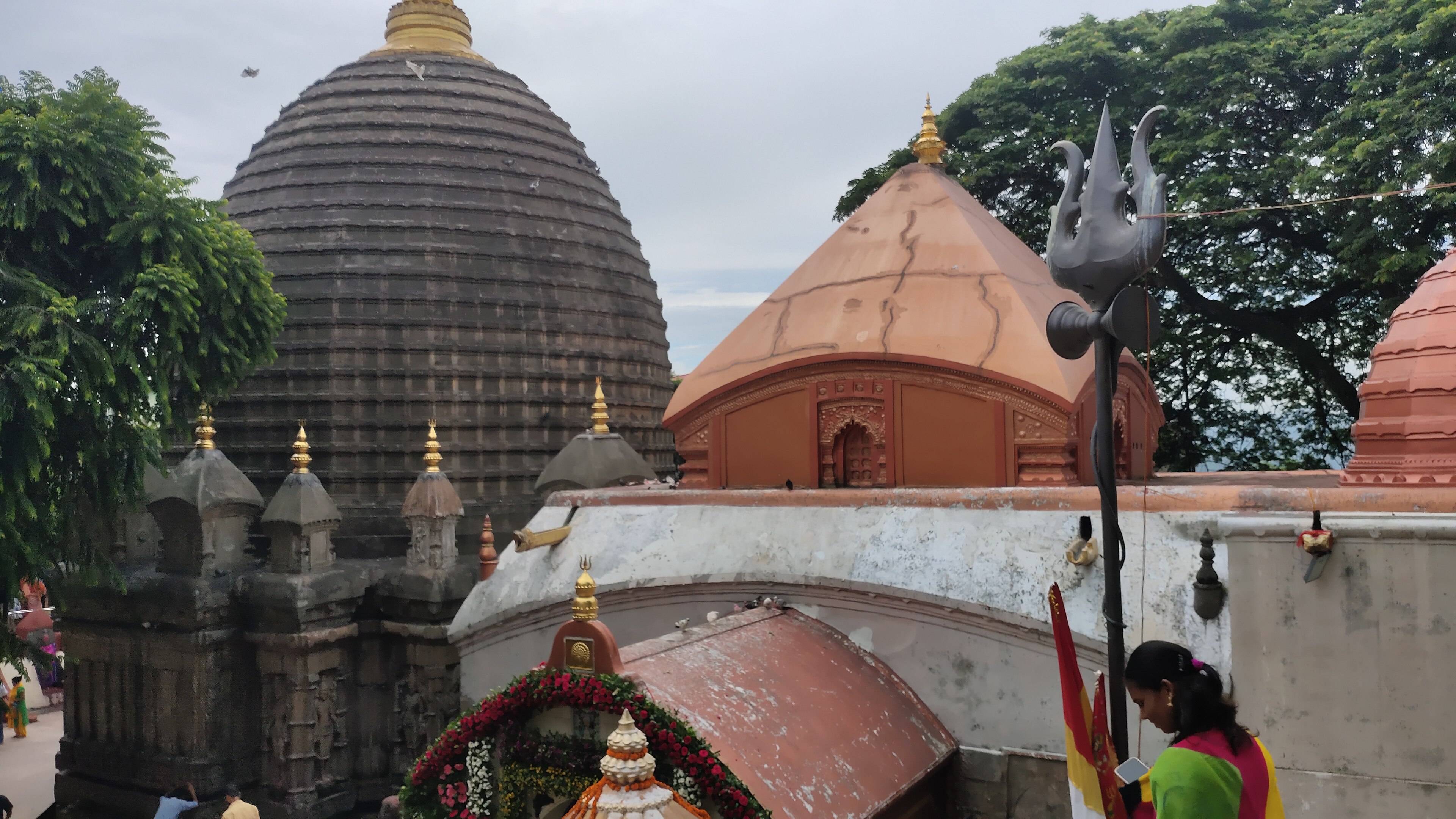
The ten Mahavidyas are ten forms of the goddess in tantric tradition. Kamakhya is one of the few places where all ten are worshipped together.
| Mahavidya | Where |
|---|---|
| Kamala, Matangi and Tripura Sundari | Inside the main Kamakhya temple |
| Kali, Tara, Bhairavi, Chhinnamasta, Dhumavati and Bagalamukhi | Separate temples around the complex |
| Bhubaneswari | At the top of Nilachal Hill |
Bhubaneswari Temple, at the highest point of the hill, is worth the short walk up after darshan for its views over the Brahmaputra and the city.
The Ambubachi Mela
Every June the temple closes for three days to mark the goddess's yearly menstruation. When it reopens, the crowds are among the biggest in India.
Read our Ambubachi Mela guide for dates and planning tips.
Visiting Kamakhya today
The temple is open every day except during the Ambubachi closure. The general queue can take several hours, especially at weekends and in festival weeks.
- To keep it short: book our Kamakhya Temple VIP darshan. It costs ₹2,499 per person and includes the temple's VIP pass. Our coordinator meets you at the temple, guides you through the VIP line and explains the rituals.
- Planning your day: see how to reach Kamakhya Temple for routes and a one-day plan.
- Timings and dress code: see our Kamakhya darshan guide.
Helpful Answers
Frequently Asked Questions
Why is Kamakhya Temple famous?
It is one of the most important Shakti Peethas, where the yoni of the goddess Sati is said to have fallen. It is also a major centre of tantric worship and hosts the Ambubachi Mela.
Who built Kamakhya Temple?
The present temple was rebuilt in 1565 under the Koch king Naranarayan, on the remains of much older temples. The Ahom kings later expanded the complex.
Is there an idol in Kamakhya Temple?
No. The goddess is worshipped as a yoni-shaped stone in the sanctum, kept wet by a natural spring.
Which goddess is worshipped at Kamakhya?
The goddess Kamakhya, a form of Shakti. The ten Mahavidyas are also worshipped in and around the temple.
How old is Kamakhya Temple?
The site has been sacred for well over a thousand years. The present building dates from 1565.
Plan This Journey
Turn this Guwahati guide into a trip that fits your pace
If this guide is part of the kind of holiday you want, Breeziah can help shape the route, travel flow and stay style around your dates, comfort level and destination priorities.