
Hornbill Festival 2026 Guide: Dates, Tickets, Permits and Where to Stay
Published
Reading time
9 min read
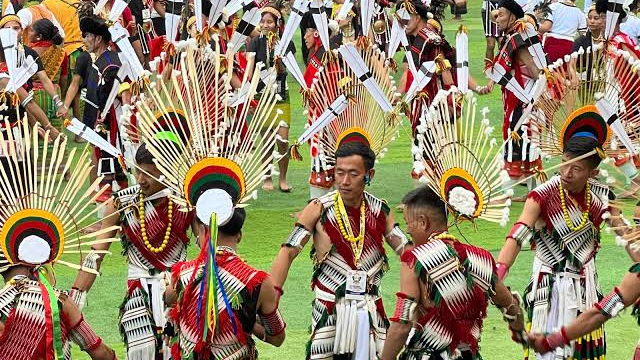
The Hornbill Festival 2026 runs from 1 to 10 December at the Naga Heritage Village in Kisama, about 12 km south of Kohima, Nagaland. It is the 27th edition of the festival Nagaland calls the "Festival of Festivals", and it brings every major Naga tribe to one hillside for ten days of dance, song, food, crafts and traditional games.
This guide covers what you need to plan a trip: dates, tickets, the permit every visitor needs, how to get to Kohima, where to stay, and how to spend your days and evenings.
Key takeaways
- Dates are fixed every year: 1 to 10 December, starting on Nagaland Statehood Day.
- Every visitor, Indian or foreign, needs a Nagaland Inner Line Permit (ILP). Apply online before you travel.
- Foreign nationals also need a Protected Area Permit (PAP), applied for in advance through the FRRO portal.
- Entry was Rs 150 per person in 2025. Tickets are bought at the Kisama gate, not online.
- Kohima rooms sell out weeks ahead. Book your stay by October if you can.
| Detail | Hornbill Festival 2026 |
|---|---|
| Dates | 1 to 10 December 2026 |
| Edition | 27th (first held in December 2000) |
| Venue | Naga Heritage Village, Kisama, Kohima district |
| Distance from Kohima | About 12 km |
| Nearest airport | Dimapur (about 70 km from Kohima) |
| Entry fee | Rs 150 in 2025; 2026 rate set by organisers |
| Permit | Nagaland ILP for all visitors; PAP for foreign nationals |
What is the Hornbill Festival?
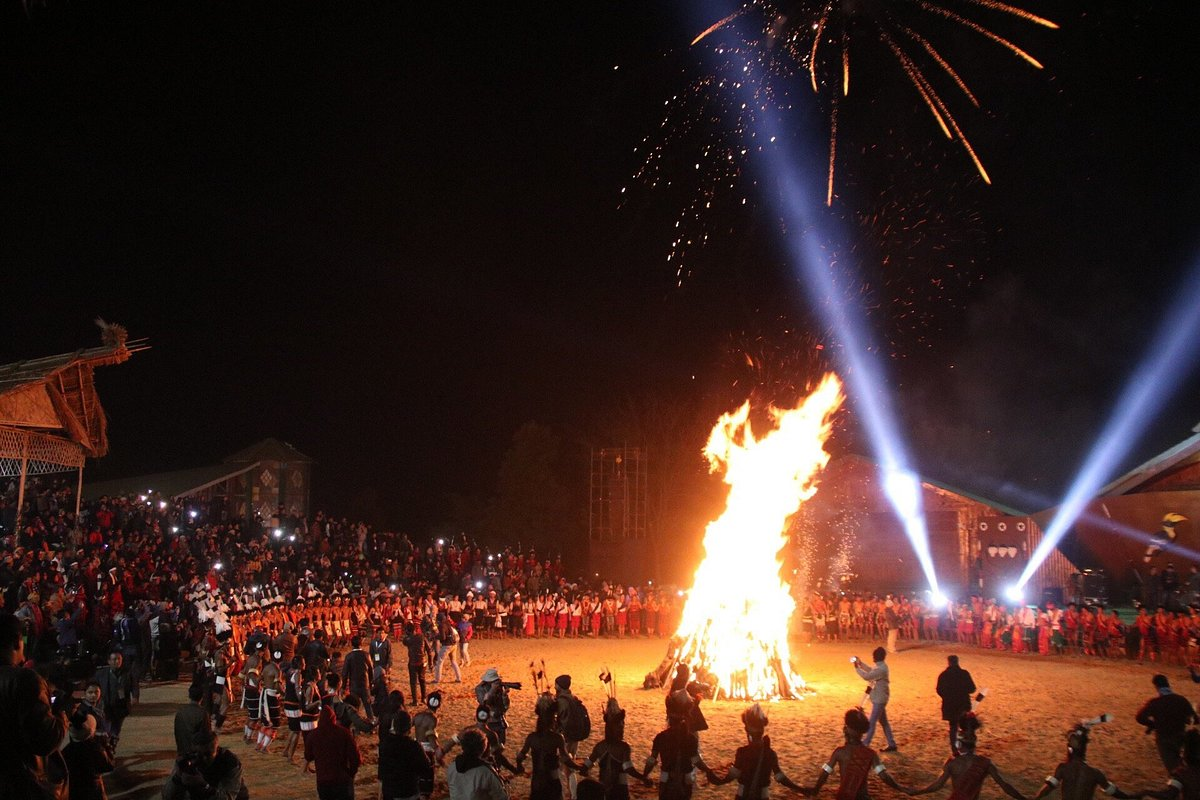
The Hornbill Festival is Nagaland's biggest annual cultural event, organised by the state's Department of Tourism and Department of Art and Culture. It began in 2000 to bring the state's tribes together in one place and to showcase Naga heritage to visitors.
The festival is named after the hornbill, a large forest bird that appears in the folklore of most Naga tribes. Its feathers traditionally decorate ceremonial headgear, so you will see the bird's image everywhere at Kisama.
Each tribe has its own morung, a traditional community house, at the heritage village. The morungs double as mini museums and food stalls, so walking between them is the best way to see how different the tribes are in dress, architecture and cooking.
Hornbill Festival 2026 dates and daily schedule
The festival always opens on 1 December, which is also Nagaland Statehood Day, and closes on 10 December. The dates do not move, which makes planning easier than for most Indian festivals.
A typical day at Kisama looks like this:
- Morning: gates open and the first tribal performances begin in the main arena.
- Midday: food at the morungs, craft stalls, and indigenous games such as traditional wrestling.
- Afternoon: more performances, competitions and exhibitions before the venue closes in the late afternoon.
- Evening: the action moves to Kohima town for the night bazaar, concerts and the rock contest.
The opening day (Tuesday 1 December) and the weekend of 5 and 6 December draw the biggest crowds. For a calmer visit, pick a weekday such as 2 to 4 or 7 to 9 December.
Tickets and entry fee
You buy your entry ticket at the Kisama gate. There is no need to book online in advance.
For the 2025 edition, the organisers set a uniform entry fee of Rs 150 for everyone, locals and tourists alike, according to a Morung Express report. The same report noted a Rs 200 charge for the festival brochure and separate small fees for some attractions. Expect a similar structure in 2026, and carry cash for the gate and stalls.
Permits you need for Nagaland
This is the step most first-time visitors miss. Every visitor to Nagaland needs an Inner Line Permit (ILP), and the official Tourism Nagaland entry permits page confirms this applies to both domestic and foreign tourists.
ILP for Indian travellers
- Apply online at the official Nagaland ILP portal a week or more before you travel.
- Enter your travel dates and the districts you will visit (Kohima and Dimapur for most Hornbill trips).
- Upload a photo and a government ID, pay the fee online and download the permit.
- Carry a printed copy and the same ID. Permits are checked at entry points and hotels.
You can also get an ILP from the Deputy Commissioner's office in Dimapur, Kohima or Mokokchung, or from Nagaland's Deputy Resident Commissioners in New Delhi, Kolkata and Guwahati. During Hornbill week, applying online saves you a queue.
Extra permit for foreign nationals
Since December 2024, foreign nationals again need a Protected Area Permit (PAP) for Nagaland. Apply through the e-FRRO portal well before your trip, as it is not issued on arrival. Our Northeast India permits guide explains the rules for every state if you are combining Nagaland with Assam, Meghalaya or Arunachal Pradesh.
How to reach Kohima and Kisama
The easiest route is to fly into Dimapur, the only airport in Nagaland, then drive about 70 km to Kohima. The drive takes roughly 2.5 to 3 hours through the hills.
| Route | Distance | Time (approx.) | Best for |
|---|---|---|---|
| Dimapur airport to Kohima | About 70 km | 2.5 to 3 hours | Most travellers |
| Guwahati to Dimapur by train | Around 270 km | 4 to 5 hours | Budget travellers from Assam |
| Guwahati to Kohima by road | About 350 km | A full day | Road trips and groups |
| Kohima to Kisama | About 12 km | 30 to 45 minutes | Daily festival commute |
Shared taxis run between Dimapur and Kohima, but during Hornbill week they fill quickly. A pre-booked cab is worth it if you are arriving with luggage or on a late flight. From Kohima, taxis and festival shuttles make the short trip to Kisama each morning.
If you are flying in from outside the Northeast, many flights connect through Guwahati or Kolkata. Guwahati's new terminal has made that connection much easier, and our Guwahati travel guide is useful if you want a night there on the way.
Where to stay during the festival
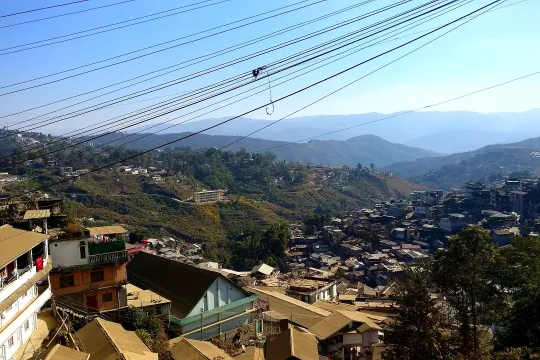
Stay in Kohima if you want easy access to both Kisama and the evening events. Hotels here are the first to sell out, and rates rise sharply in the first ten days of December.
Other good options:
- Homestays in Kisama and nearby villages such as Kigwema. You wake up close to the venue, and your hosts often share home-cooked Naga meals.
- Tented camps near Kisama. Several operators set up camps for festival week. They are fun and close to the action, but nights are cold, so check that bedding and hot water are included.
- Dimapur hotels for late planners. You will face a long daily commute, so this only makes sense if Kohima is full.
Whatever you choose, book early. For a December trip, October is a sensible time to lock in your room.
What to see and do at Hornbill
Tribal performances in the main arena
The arena is the heart of the festival. Tribes perform war dances, harvest songs and ceremonial rituals in full traditional dress, and each performance is short, so you see many tribes in a single morning.
Morungs and Naga food
Every morung serves its own tribe's food. Look for smoked pork with bamboo shoot, axone (fermented soybean) dishes, rice beer, and sticky rice cakes. Vegetarian options exist but are fewer, so vegetarian travellers should ask at each stall.
Crafts, games and competitions
Stalls sell hand-woven shawls, bamboo work, jewellery and wood carvings straight from the makers. Competitions change each year but often include traditional wrestling, archery and the famous Naga king chilli eating contest.
Evenings in Kohima
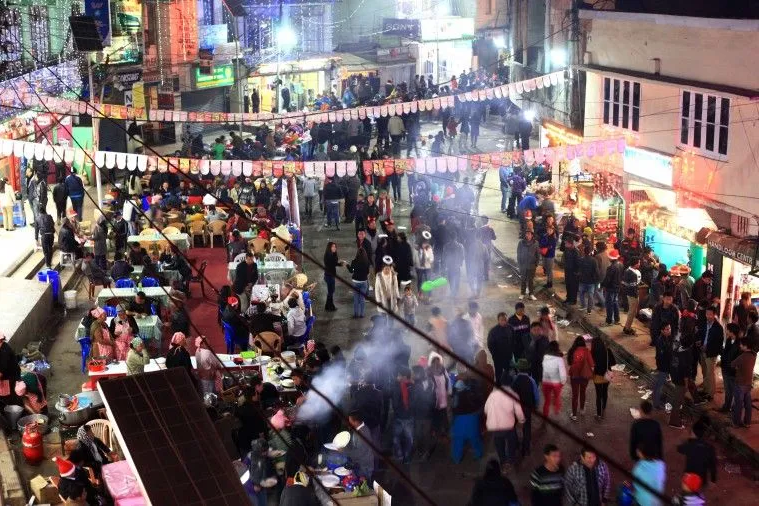
After Kisama closes, Kohima comes alive. The night bazaar fills the town with food and craft stalls, and the Hornbill rock contest and other concerts run through the festival. Evenings are cold and busy, so plan your ride back to your stay before you head out.
Day trips worth adding
Hornbill is best combined with a day or two of exploring. These are all within easy reach of Kohima:
- Kohima War Cemetery. The memorial to the 1944 Battle of Kohima, a turning point of the Second World War in Asia, sits on the old tennis court battlefield in the middle of town.
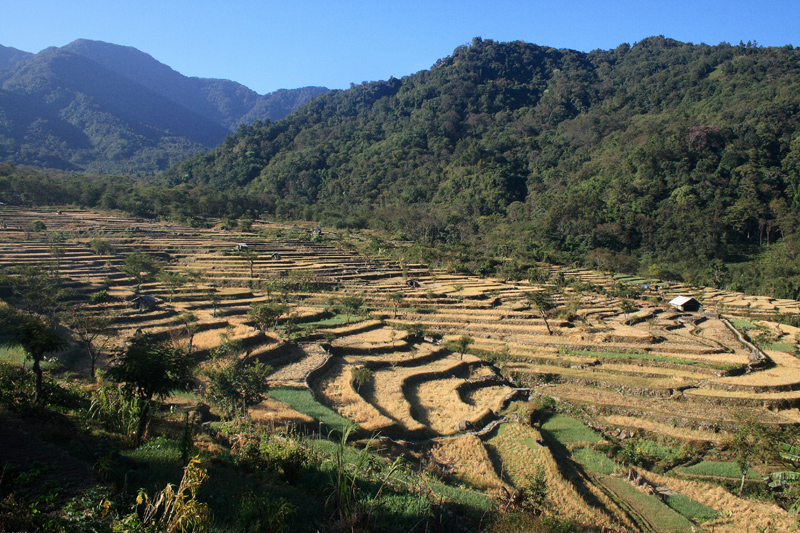
- Khonoma village. About 20 km from Kohima, this Angami village is known as Asia's first green village for its community-led conservation, with terraced fields and stone gateways.
- Dzükou Valley. A day hike or overnight trek from Viswema or Zakhama. December is cold and can bring frost, but the views are clear and the crowds are small.
Weather and what to pack
December in Kohima is dry and clear, which is why the festival is held then. Days are mild and pleasant in the sun, but nights drop to low single-digit temperatures, and Kisama is exposed to wind.
Pack:
- A warm jacket, thermals and a woollen cap for evenings
- Comfortable walking shoes for the slopes at Kisama
- Sunscreen and sunglasses for bright days
- Cash in small notes, since card and UPI coverage at stalls can be patchy
- Printed copies of your ILP and ID
A simple 4-day Hornbill itinerary
- Day 1: Fly to Dimapur and drive to Kohima. Evening at the night bazaar.
- Day 2: Full day at Kisama. Arrive early for the morning performances and eat lunch at the morungs.
- Day 3: Morning at Khonoma village, afternoon back at Kisama, evening concert in Kohima.
- Day 4: Kohima War Cemetery and the local market, then drive back to Dimapur for your flight.
Add a day for Dzükou Valley if you enjoy trekking, or extend into Assam for rhinos at Kaziranga National Park on the way back. If you would rather have the permits, stay and transfers arranged for you, you can plan your Hornbill trip with Breeziah.
Helpful Answers
Frequently Asked Questions
The Hornbill Festival 2026 runs from 1 to 10 December 2026 at the Naga Heritage Village in Kisama, near Kohima. The dates are the same every year.
Yes. All visitors to Nagaland, including Indian citizens, need a Nagaland Inner Line Permit. You can apply online at ilp.nagaland.gov.in. Foreign nationals also need a Protected Area Permit arranged in advance through the e-FRRO portal.
Entry was Rs 150 per person for the 2025 edition, bought at the Kisama gate. The organisers set the rate for each edition, so check again closer to December.
Dimapur Airport is the nearest. Kohima is about 70 km away, roughly 2.5 to 3 hours by road, and Kisama is another 12 km beyond Kohima.
The opening day on 1 December has the ceremony and big crowds, as does the weekend of 5 and 6 December. For fewer people and the same performances, go on a weekday such as 2 to 4 or 7 to 9 December.
Yes. Kohima and Kisama are busy and well policed during festival week, and the festival draws large numbers of domestic and international visitors every year. Normal travel precautions apply.
Plan This Journey
Turn this Nagaland guide into a trip that fits your pace
If this guide is part of the kind of holiday you want, Breeziah can help shape the route, travel flow and stay style around your dates, comfort level and destination priorities.